
SKEPTIC’S GUIDE TO INVESTING
Straight Talk for All, Nonsense for None
About - Our podcast looks to help improve investing IQ. We share 15-30 minutes on finance, market and investment ideas. We bring experience and empathy to the complex process of financial wellness. Every journey is unique, so we look for ways our insights can help listeners. Also, we want to have fun😎
Your Hosts - Meet Steve Davenport, CFA and Clem Miller, CFA as they discus the latest in news, markets and investments. They each bring over 25 years in the investment industry to their discussions. Steve brings a domestic stock and quantitative emphasis, Clem has a more fundamental and international perspective. They hope to bring experience, honesty and humility to these podcasts. There are a lot of acronyms and financial terms which confuse more than they help. There are many entertainers versus analysts promoting get rich quick ideas. Let’s cut through the nonsense with straight talk!
Disclaimer - These podcasts are not intended as investment advice. Individuals please consult your own investment, tax and legal advisors. They provide these insights for educational purposes only.
SKEPTIC’S GUIDE TO INVESTING
TikTok Politics Meets Billionaire Money
Use Left/Right to seek, Home/End to jump to start or end. Hold shift to jump forward or backward.
Please text and tell us what you like
New York City can look unstoppable right up until incentives flip. We sit down with Fraser Rice to take the temperature inside the “belly of the beast” near Grand Central and talk about what a tax-the-rich political wave means for the business community, Wall Street, and anyone trying to build wealth in a high-cost, high-tax city. Ranked choice voting, media-savvy leadership, and symbolic fights with billionaires create headlines, but we keep pulling the thread that matters to investors: how quickly confidence and capital can move when people feel targeted instead of valued.
We also get practical about the city’s real pressure points. Housing supply, zoning reform, rent regulation, and homelessness aren’t abstract policy debates, they shape whether New York stays livable for the talent and industries it depends on. Fraser shares why Class A commercial real estate can thrive even while affordability worsens, and why public safety “cover” can mask deeper leadership tests that show up later. The Ken Griffin and second-home tax conversation becomes a case study in how politics and economics collide when major employers can quietly reallocate jobs and investment across states.
Then we widen the lens to the markets and what Fraser’s ultra high net worth clients are wrestling with: AI boom valuations that echo past bubbles, energy prices that pinch consumers, and interest rate uncertainty that can reprice everything. We walk through a margin-of-safety mindset, stress testing drawdowns, and bucketing risk over multi-year horizons. Finally, we dig into private credit: why the expected returns can be attractive, why illiquidity is the real cost, and why the rush to put private credit into 401(k)s should make long-term investors ask harder questions. If you found this useful, subscribe, share it with a friend, and leave a review. What’s the biggest risk you’re positioning for right now?
Straight Talk for All - Nonsense for None
Please check out our other podcasts:
https://skepticsguidetoinvesting.buzzsprout.com
Disclaimer - These podcasts are not intended as investment advice. Individuals please consult your own investment, tax and legal advisors. They provide these insights for educational purposes only.
Welcome And Who Fraser Advises
Steve DavenportHello everybody and welcome. Today we have a special edition of Skeptics Guide to Investing. We have our friend Fraser Rice. And Fraser is bringing his ultra-high net worth of planning and insights into markets and into what's happening in the head of capitalism in the world in New York City. How is the center of capitalism surviving? You know, I guess it's six months later. And tell us what's what's going on in the NYC.
Frazer RiceSure. So I I'm here right across the street from Grand Central Terminal, so I'm right in the belly of the beast. Um I I think Mandami's election is still being digested. Uh he has had a variety of um measures and initiatives that are that I think are telling the world, you know, or confirming
Mandami’s Agenda And Business Anxiety
Frazer Ricefor the world what he is and what he sort of ran on as a platform. Um the tax the rich motif and going out in front of Ken Griffin's apartment building and doing a TikTok sort of indicated that he's serious about these initiatives. Um and then the intersection between him and the state, , he has made a big deal out of trying to cast himself as a fiscally responsible yet service-oriented mayor. And , you know, for those of us who watch it, we sort of look and say, well, you know, you're you're taking credit for things that already should be a part of things, and you're also increasing spending, and you know, it feels like you're creating sort of false narratives around deficits. Um he's using that to drive different initiatives home. Um and I think they play well to, you know, a sub-150,000 a year salary type of base, and that's what got him elected. Uh and you know, we look at it and sort of we're saying, you know, what does that mean from the for the business community? And I think that's a little bit murky and dark. He just met with Jamie Diamond yesterday or the day before, after the Ken Griffin debacle. So um I think he's politically astute enough to you know try to make inroads with the business community, whatever form that takes. Uh, but he he is he is very strident in that his democratic socialism, and I think New Yorkers are finally coming to grips with that, even maybe maybe those people who voted for him and thought he might learn or be housebroken by the job.
Steve DavenportCan you just give me one variable? I I felt during COVID, New York was the center of so much emotion with everything going on and with the governor, and it just it just felt like everything the way New York was handling COVID was kind of how the country felt overwhelmed by being you know, people having to go up there stairways as a five down, you know, five-story
Post-COVID New York’s Mood Check
Steve Davenportwalk-ups with you know carry and everything. How does New York feel now? Is it does it has it come out of COVID and Mandani is just a part of the the the new order, or how is it different or like are this are the people on the street the same? Are the people in the stores the same, or is it is it changed?
Frazer RiceUh so just for some recent history, you know, we came out of Bloomberg and then de Blasio, and we had a term of Adams, who was just you know, just chaos in many ways. And now we're in Mandami, , who was elected with I think something like 35% of the vote. So you had a very narrow subset. Rank choice voting really allowed sort of a narrow partition of Democratic voters to allow someone who is probably a little bit more radical than we're used to to get into the office. I think for the rank and file New Yorker, and that's a broad brush considering how big it is and how diverse it is, , I I think people feel like New York is extremely expensive. Uh and that that goes up and down the income spectrum. Uh I think income disparity, I think wealth disparity is a definite thing. Um, but on the same notion, I think Wall Street's doing well, bonuses are good, real estate seems to be doing okay. Uh I haven't really heard any quakes about that. The commercial real estate market in great areas is doing unbelievably well. There's no crisis there. The JP Morgan building has come online, Ken Griffin's building for all the noise is going to go up. Uh, you know, Class A real estate in the commercial space is doing just fine. I think if you go out into the hinterlands of Manhattan, et cetera, that's where you might have some challenges. But everything at the moment seems kind of okay. And I think, you know, New York, New York will be New York and everybody kind of sort of slossed through. Um, you know, tactically speaking, I think one thing that's interesting is this real sort of tax-the-rich mentality, which I think is is nationwide. I mean, you're seeing it in Washington with new income taxes, Washington State, I mean, the wealth tax initiatives in California, , Illinois, Massachusetts, et cetera, they're all looking at things too. And then in New York, this , you know, the Pieta tear tax, where um second homes looks like for a million dollars of assessed value that if you don't have sort of your primary residence attached to it, you're gonna get another tax on it. Uh these initiatives nationwide are popular and in New York, you know, from sort of a crucible of democracy perspective, I think if you're able to get anything passed, it's gonna be here because you've got Democrats a supermajority or a supermajority in the assembly, and I think a pretty good majority in the Senate, and then a Democratic governor, although she's in an election year, , I think the the appetite for that is stronger. And , you know, for that sub-150,000 a year person, they might say, hey, you know what, this is a reaction to something that I'm feeling as far as affordability and as far as income and wealth disparity. This feels good. Uh at the upper end, the business community I think looks at it and says, hmm, you know, is this is this really where I want to plant my tree and build a business? And it's no secret that , you know, income migrates and wealth especially migrates from high-tax places. Uh and and I think New Yorkers in general we're further and further away from the 70s and 80s, and so that institutional knowledge I think is eroding over time. And you know, the the the those darker times when you don't remember them and you only remember Bloomberg and when the city ran like a top, , then it it gets you you might be able to you might trip and make some of the old mistakes again.
Steve DavenportIs Mandami de Blasio 2.0?
Frazer RiceUh I I think he's different than de Blasio in a couple major ways. Number one, I think Mandami is not of the traditional Democratic Party apparatus. Uh he's younger, he's not what I would call a I mean he's better looking. He's tall, he's shorter, he's using his own name, , all
De Blasio Comparison And Public Safety Cover
Frazer Riceof that stuff. Uh but he he spent a brief time in the assembly. So he has a little bit of um Albany experience, but he's so young and and such a media savvy guy. And I think he borrows a lot from the Trump playbook as far as understanding the media and and how to handle it and how to score points with a broader electorate and kind of bypass the traditional political modes like the press, et cetera. Um, and so I I I view him as a little bit I mean, six months in savier. Um, I think Mundami also has an interesting thing where Commissioner Tish, who's our police commissioner, has given him an interesting bit of cover for the first year of his mayoralty, in that, you know, her competence as police commissioner, she has a good reputation and the city still feels safe. I think if she ever decides she wants to do something different and then Mandami has to replace her, I think that's when his mayoralty really starts, because then he will own public safety in a way that he doesn't right now.
Clem MillerOne the other so so Fraser, um a few things, a few thoughts I have that I'd like your opinion on. First of all, you know, when you talk when when I think about Mam Dani and I think about you know a New York under Mam Dani, I think about you know a sort of a return to the past in the sense of
Housing Supply, Zoning, And Homelessness
Clem Milleryou know thinking about my own wife. You know, she grew up in maybe a place you know about called Co-op City. Um and you know at one point you had you know these kind of socialist or semi-socialist building projects around New York. And to me, what he's doing almost harkens back to to that era. So that's one question I have for you. If if you think that basically this is a return to the past. The second question I have for you is you know, when I think back to when I would first travel up to New York when I was much, much, much younger. Um I remember you know, coming up from C D seed up to New York on the train. I remember a time when Penn Station was a disaster. Okay. Uh you had all sorts of homeless around. Um and um now you go up there and you and at least my observation is you see less homeless, certainly at the train station. You've got a brand new terminal, which is absolutely amazing in the old post office. And and it just seems to it feels to me like there's less homeless, but you're there every day, every hour of every day. You look around. Do you think that I mean I I tend to think that homelessness is a kind of an indicator for the health of the city. And do you see it stabilized? Do you see it going up? What do you think?
Frazer RiceUh I'll start with the first one with the return to the past. I I I think the it's still early to tell. I there's no question that housing is a huge problem in New York. There's not enough supply, the ability to build things is difficult, the renter rent control laws create this artificial sort of market spasm where you know you have whole bunches of apartments that are left empty because landlords don't want to put people in at artificially low rents, , et cetera, et cetera. I mean, I think Mandami, if he wanted to have a statue built around him, , would be very pro- housing development, pro loosening of zoning and things like that. And I thought when he went down and visited with Trump, those are two things that that is one area where I think the two of them probably could break bread over, um, is the you know, sort of creating real estate opportunities um within New York State. Um and so the the thing I watch closely, there's a zoning redevelopment and in sort of a colopsity-like housing situation down on 27th Street on the west side of Manhattan. And it's basically shovel ready. And and I I think if that if that is able to get pushed forward and done during his administration, and a lot of the work was done far well before he was elected. But if that's able to happen during his administration, that's a win. And I think that's something that could be used to as a you know as an example for zoning reclassification and you know getting out there and figuring things out as far as building more housing. Uh that said, you know, the the tenant class in New York State, excuse me, New York City is is I mean, that they voted for him. And to threaten any of that, he loses a base. Uh I think one other component is that it'll be interesting to see in three and a half years the voters who voted for him that will be three and a half years older and will have be at a different stage of life. And it'll be interesting to see whether his whether his politics follow them or whether he continues to try to be, you know, the TikTok mayor and stay young. And you know, suddenly it's like, you know, hello, fellow kids, , and it doesn't work as well. Um, I don't know. Uh that will be it'll be interesting to see. Um, and now as far as the homelessness is concerned, it feels about the same as it normally does. Um, I don't feel he certainly hasn't gone in and swept up the streets, but by the same token, um it is not as it is not as stark as it kind of was during COVID when things kind of fell apart a little bit on that front. And so I I think the the homelessness indicator, which I think I agree with you, is a good one. It it sort of gives you an indication of, you know, are you willing to take on a hard issue? Are you willing to figure out different things? Are you willing to use the police force and others to you know clean things up and move forward? Uh still too early to tell on that, but nothing has sort of fallen off the cliff yet.
Clem MillerSo I I got a follow-up. So you know, I I guess one way to look at New York and what's going on with the economy in New York and the social situation in New York is to compare it to the alternatives. And so what's happening around New York and does it what does that mean for New York? So what what's happening
Suburbs And The Regional Wealth Engine
Clem Millerin Westchester, what's happening in you know, Long Island, what's happening over in in New Jersey? I mean, does that are those doing well? Are they doing worse? I mean, what does that bode for New York city?
Frazer RiceYeah, so I mean the surrounding areas, I mean, let's start with property values. I think they're as part of the larger sort of asset creation trend and you know the stock market doing well and all that, that that is the engine of wealth creation in the New York metro area. I think property values are holding decently. Um, I think that you know, higher interest rates and sort of the affordability issue, I think the people are holding on to their houses a lot longer. And so supply is lower and aging. Uh, and so that is one reason why property values may be stepping up. Um the you know, as far as the economic drivers, I don't think there's anything particularly plus or minus now versus pre-Mindami in those various regions. Uh, you know, I think the migratory effects of you know statewide tax policy and affordability and regulation around business and so on has been somewhat consistent. Uh and that Mindami stamp, to the extent it has any impact on the you know the hinterlands, hasn't been felt yet. Uh, I think Hokel in particular is extremely sensitive to that. Uh I think she she understands that um in her election, which is coming up this year, , she has to be real ginger about kowtowing to the progressive left because in doing so, she runs the risk of alienating Long Island, Westchester, and places that are more sort of numerically inclined. And if she loses those areas, that that that creates a threat that she might not otherwise want to have to deal with.
Clem MillerOkay. Uh one more thing, and then Steve, I'll hand it back over to you. So, you know, in a way I perceive Mamdani as sort of a reaction to Trump. And and so you know, if as it seems Trump support is collapsing and we see and we see you know mega Republicans sort of um diminish in their authority nationwide, are we going to see on the other side Mamdani's support collapse as well? Or do you think that actually it's gonna work the other way? I mean, I I tend to think his is gonna collapse too, um, and we'll move toward the center, but maybe it's more of a pendulum and it'll move towards towards him. I I don't know. What do you think?
Frazer RiceSo there's a couple thoughts here. Number one, I I not sure I'm equating them, but I almost view Trump or MAGA, especially and Mandami progressivism as sort of two ends of a horseshoe. Uh, and that you have the they're here and they're closer together than you think, , even if policy-wise they might be different. I think the way they communicate, I think the way they inflame, , you know, they they they stir
Trump, Mandami, And The Horseshoe Effect
Frazer Riceup they stir up heat, much like professional wrestling, because that's their brand. And so then the the policies the policies kind of follow along that. It's almost like the policies don't even matter at that point. They're there to fill a narrative in order to, you know, sort of promote clicks and attention and that type of thing. Um, I think your point about um, you know, as Trump starts to exit whatever form that takes, we don't, you know, I sincerely doubt he's gonna go for a third term. My sort of wrong at the top of my lungs prediction is he's going to resign in his last State of the Union and try to set himself up to be the fifth on Mount Rushmore and to secure his pardon. Um but that notwithstanding, that notwithstanding, , as he starts to exit and you start to you start to have a Republican Party that has to kind of figure out what it wants to be and who is going to try to insert themselves into that vacuum of power and and notoriety, which is impossible to fill, then that'll be inter that's that's what the Democrats are gonna have to work off of. Mindami, I agree, is a reaction to Trump, but I think he's closer to Trump. I agree with you that his support as his actual policies come into play is going to it's going to be a real challenge for him. Now, the benefit he has is that New York City is five to one Democrat to Republican voter. So he has so much leeway that, you know, any mistake he makes, you know, he he's going to have a lot of leeway when he seeks to get re-elected. Um I think as it relates to maybe national trends. I just have it's strange. I have no idea where the Democrats are gonna go. Uh because I look at the field of people out there, and if there's 20 Democrats all listed, and it's like, who do you think is the gonna be the candidate? I would take field, , not any particular candidate out there, because I just I I I think they have they're adrift policy-wise, and they need to have a real come to Jesus moment as far as what they want to be, um, and how that lines up with you know, sort of the fatigue people are going to have with Trump going to the polls back in 2028. Uh, whether that lines up or not, , you know, the fatigue could be fixed by a Republican like a Rubio or somebody who seems to connote calm and and something a little more stable. Or, you know, if you have that person who's a little bit more ideologically toward the middle on the left side, maybe they're the one that is going to take over. But you know, again, just to pull it back to Mandami, you know, I think an interesting feature of New York is ranked choice voting. Um he he got in with a narrow bandwidth of support. And if things go wrong, ranked choice voting in New York City could you could get someone who is ideologically very similar, but with a different mindset and maybe a different competence level. And Mandami has to make sure that he gets very tangible wins for people, or he he sets himself up to get sent out like Adams did, another one-term under the first ranked choice vote schema.
Steve DavenportOkay, great. When I look at what's happening, I think that you're right, this midterm election is going to be critical. I don't think that Trump is going to be able to cobble together kind of all of the immigrant votes and in you know some of the people he's had in his alliance before. So when I look at what's happening with the Citadel,
Ken Griffin, Second-Home Taxes, And Flight Risk
Steve Davenportum you know, the the manager there, and how he is why would he decide to put all of his officers in New York? And then now when he makes a threat to leave, is he really making a threat or has he already got so much investment in that building that he's gonna be like like I I just don't know why he's on the fence on both sides of this issue in terms of is he going to Miami or is he not going to? to Miami busy you know and and Mandami and Hochel I just find it unusual that that Mandami would have her support in going after this you know these million dollar homes for that are second homes for people.
Frazer RiceWell so if I'm Ken Griffin you know first of all to have somebody you know TikToking in front of my apartment building in the wake of you know the United Healthcare assassination and I don't feel great about that I also you know put in you know he's coming out of Chicago he left Chicago for the same reasons he's complaining about New York at the moment um you know I think Ken Griffin is in some ways doing right by his shareholders and saying look you know I I'm trying to extract what I can out of out of out of a situation that's very difficult and at the same time you know emotionally I think I'd be put out and ticked off also and I think he wants to you know put put this young mayor in his place a little bit and you know he can allocate resources much like JP Morgan does and many of these other financial institutions which are reducing headcount in New York even though the figurehead CEO or the headquarters is here um I think that is the quiet that's almost like the quiet quitting that's going on and could go on across the major employers here in the state you know if I'm Hokel I sort of look at that and I say you know what are you doing? Why are we poking the bear, especially in election and and an election year for me election year I just don't you know I would be it would make more sense to me as a somewhat outsider to say okay once Hokel got re-elected and has four years and she's already let's say she's that'll be her third and a half term I guess um or something like that. You know at that point then you can kind of gun it as far as tax initiatives and things like that. Why do you do that now if you had just a little bit of patience you know Mindami would still have three years left. Uh I it seemed it seemed like jump in the gun a little bit. And that might have been political immaturity that might have been sort of the Trump playbook you know just blow things up and you know ask questions later and if you distract it it doesn't come back and stick to you that type of thing. I don't know that's that's that's why about a different field of work than politics I guess is that maybe I don't understand these things. But I I I think you know it it it comes down to the fact that you know the the ecosystem in New York has had a long history of durability. It's had you know it is the engine for capitalism in this country and frankly the world but there is fragility here. And New York doesn't work if it's unsafe or and it doesn't work when you can't make money here. And if you start putting real conditions on things then people will find their way and you know work from home low tax states there there are there are pressures out there that are different than they used to be um and you know the the flight of manufacturing the flight of headquarters back in the 70s and 80s when things were really bad you know there's no guarantee everything's gonna be great and frankly I look at a place like London as an example you know when you when you finally send the message that you're not you know wealthy aren't welcome and then you really screw yourself up by Brexiting and creating conditions that just don't make any sense for it to invest in people won't invest they'll go somewhere else and you know I think London is trying to figure itself out in that environment and that's what New York should try to avoid.
Steve DavenportRight. I mean I look at the Texas development of headquarters and I think that's what that's what's playing out right I mean I look at the movement to Florida of some of these hedge funds and I'm like it makes sense. I mean I don't really think that the top of any company would want to be headquartered in New York because all those executives I think are doing taxes on the per day right I mean I think they probably you know are going to be in that city and be subjected to six months in a day of of New York um so I I I don't get it in terms of like if if Cynadel was doing what's best for all of the team I think they would they would make the move out and wouldn't have put the headquarters. I think diamond will look back and say this wasn't the right idea to put our headquarters here.
Frazer RiceBut well you know that if some people are driven by non-economic things. I'm sure Jamie Diamond you know putting the building there and that that's his legacy when he retires and passes away you know other people are willing to pay the price to be in New York I think where wealthy people really take umbrage and you know I deal with a lot of them and I've seen it is when they feel taken for granted and that is the when when it goes from I feel like wealthy people are willing to pay taxes. They are not necessarily going to optimize everything around that they're willing to pay taxes if they feel like it is in service of something bigger than themselves. This doesn't feel like that this feels punitive it feels um there is a revenge component and I think that when you send out a message that we are going to take you for granted for ill-defined stakes um that message eventually lands and people aren't going to put up with it and if you combine that with a with an environment where things get less safe or less interesting um or less opportunistic you know then people are willing to look down and say you know what you know maybe I should kick it down to Jupiter Florida or you know move my business to Texas. You know it's no secret that if you're a you know if you're a manufacturer, New York has to bribe you to stay. If you are a tech or software company, New York is still interesting because you know younger people are here. But you know God help New York if AI really does cut software employment down because you know coders are replaced that that's a problem. And you know if I were if I were you know in charge of economic development etc I would be looking hard at that and trying to figure out ways to even further broaden the base so that people continue to view New York as an attractive place to live.
Steve DavenportSo I I think it would be good for us to shift a little bit and take a little more national and international view. I mean when when you look at your clients what do you think that people are seeking now in terms of the AI boom and the real estate and the precious metals I mean it feels like there's a there comes a point in people's wealth
AI Valuations, Energy, Rates, And Safety
Steve Davenportdecision making where it's kind of hard to figure out given inflation and wars and what Trump is trying to do with these various you know Venezuela Ukraine I mean it doesn't feel as if it there really is a safe place to go.
Frazer RiceIs that the what you're finding from individuals or have they have you got a source of safety from all of us that you know we'll feel better when this whole thing is over I I think this is a weird time in that you know what is overlook like I I think the mean currents that are that are troubling for people you you have whatever the valuation levels are for you know Nvidia and the Mag 7 and all those things which I think for most people who remember this they're thinking geez this feels this feels a lot like 2000 to 2002 there are people making gigantic investments and they aren't all going to pay off but how do I how do I disengage and take profits from it in some ways? That's on sort of the engineering and tech side of things. Then you have you know sort of higher energy prices which I think is is a weird input and you know it it takes money away from the consumer. And then you have sort of the uncertainty that exists vis-a-vis interest rates and what Warsh is going to do or not do and how much you know pressure that Trump puts on him is going to be sort of assimilated into policy. Those are the three cross currents that I think people are trying to get some some data points on so that they can kind of make decisions going forward. There are plenty of other geopolitical components as to what's happening but if you're a US based investor it's sort of like well okay you know that's all going to happen whether anybody has any input or not and Trump will sort of figure out what he wants to do there. On a pure dollar basis though, you know, energy interest rates and then overvaluation or concentration of returns in a few names that's the thing I think people are really worried about you know how do I how do I talk to people about that? Number one I think is to you know reiterate establishing a margin for safety so that if you are taking risk in your portfolio and allocating to risk assets that you're doing it in a way that if you're if you were to see a 20% drawdown or whatever, and I'm not predicting that, but if you were to see that, does that impact you at all? Is your cash flow secure so that your your expenses are figured out and then you know if if you're really kind of looking under the hood and I'm looking at sort of multi-generational time horizons, if you put things in buckets where you don't have to look at it for 10 to 15 to 30 years and you're able to look at things that are undervalued or you're able to take advantage of you know different businesses that you think have that have been beaten down um on on another side of the coin, maybe that's where you put you know just bucketing your risk in areas where they impact you less I think you know sort of good that that that the the the basics of good financial management and good asset allocation are important to reiterate now. And you know and then ultimately you know I think the um you know to the extent that the tax tail wags the dog, I think it's important to make sure that you're putting things and taking advantage of any sort of tax conditions that you've got in place.
Steve DavenportHow does the private credit like come up in your conversations or come up in people's mind as oh that's a horrible thing or oh that's an opportunity or oh that's you know I look at the world and I kind of think we need to make a decision at the beginning of the financial framework of how much is private and it's going to be illiquid
Private Credit Returns And Illiquidity Reality
Steve Davenportand you're gonna have to put it away five plus years and not touch it and how touches it oh I'm getting such a greater opportunity then um that I feel like it's worth taking that illiquidity.
Frazer RiceLook I I I private credit as an asset class we have to remind ourselves that it's pretty new and born out of the ashes of 2008. And so you know the institutional framework to be able to work out of deals that didn't work isn't necessarily there or if it was it's probably retired or dead. But private credit as an asset class has it it it has you know good expected returns. If you've got good managers who understand how to deal with covenants and and understand the nuts and bolts of lending money to a business and expecting a return to come back you should be able to do well over time. But it is an illiquid asset. This is not this is not buying Google and then trading it the same day. So I agree with you that the you know the the illiquidity components of that and where it fits in your tranche of fixed income or your alternative tranche matters. And hopefully for those advisors who piled clients into private credit, they the the clients understood what that meant. I I think that the news that's out there about oh you know the marks are low and this and that some of that I think is a little bit reactionary and maybe a little bit sensational. I think many of the underlying credits are probably more than just fine but you know you get into the histrionics of people who need to pull money out because they feel like they need to get to the exits or there's you know some sort of inflamed scandal around this or that I I that that that's an education failure of the advisory world to their client if if that's a knee-jerk move. I agree with you. I mean to to go into private credit for anything less than five years is is is not understanding the asset class. All of which is to say you know the rush to put private credit into 401ks and things like that where the best and brightest aren't necessarily what reside in those funds and you're dealing with a less educated sponsor class and an even less educated investor class I as a general manager I'm uncomfortable with that even though the quote unquote expected returns in theory should be something that a 401k person should benefit from I I I view that with especially on an after-fee basis as a scary um scary development as we go forward okay I have to ask this question because um you're a New Yorker and Madison Square Guard splitting up the Rangers in the Knicks um before the Knicks start their playoff run in the finals of the East I mean is this setting up to be they lose in four games and their franchise value goes from 7.9 to six or do you think they win and go all the way and we have a 10 million $10 billion franchise I I I think Madison Square Garden as a general matter is going to do
Should 401(k)s Hold Private Credit
Frazer Ricejust fine whether the Knicks or Nets sorry the Knicks or the Rangers make the playoffs or not um I I the fact how are you gonna split it up though like you had one asset with all three you have the building you have the cable contracts and you have kind of I mean it feels like you're gonna divide up Madison Square by how much you know one owns and the other owns or I so I I I'm I'll preface this by saying I don't know what I'm talking about, but I think what's happening is that the Dolans are kind of looking at this and saying they're they're looking at the valuations of these sports teams in as as individual components you know the Dallas Cowboys are worth 10 billion et cetera et cetera and they're saying is the sum of you know the cash flowing cable business the real estate of Madison Square Garden which by the way there's a there's a fight brewing as to replacing Madison Square Garden in a whole Penn station redevelopment and then you have the different franchises
Madison Square Garden And Peak Valuations
Frazer Riceout there you know could they are they undervalued by being under the metrics of you know sort of a conglomerate component um and you know maybe they just have stars in their eyes and saying you know maybe we can get a um good good double valuation of of these you of these different assets and you know maybe we broaden the investor class so that it creates a little more liquidity and valuation pop than we might have had before but again I haven't really looked at this closely at all so I'm I'm I'm guessing yeah I mean I I look at it as kind of like when when things are at a peak everything's at a peak like right to me the the Knicks as the second most valuable franchise in the NBA you know seems kind of hard to to fathom a little bit but you know I mean the the NBA is better when the Knicks are good. New York City runs better when the Knicks are good I so maybe maybe I'll buy into that who is the most valuable franchise I don't know I think it's LA the Lakers I I get which I guess makes sense um but you know you look at you know like the Heat or the Mavericks or Golden State or all these different things um I I to me I feel like the Knicks would be more valuable because they they own the T V distribution. Uh why you would separate that out which because it's such a big cash flow component I I don't know but I don't know it's to me it's kind of it it it was it was combined for a reason and the fact that it's not priced right I think you can spin out one of them but I would I would almost say you're gonna keep a lot of them together.
Steve DavenportIt's I don't know I think it's it's searching for gold you know at the end of the rainbow and I'm not sure it's gonna be there.
Frazer RiceBut well I'm sure Bain or McKinsey went in and like like anything if it's consolidated they tell you to break it up and if it's broken up they tell you to consolidate.
Clem MillerAnd you know there you go do you have anything you want to no I think that's well I mean I I heard you about private credit and when you were talking the first the thing that came to my mind is I mean really how do they actually value that stuff? I mean you know what in terms of the returns
How Private Credit Gets Valued
Clem Millerhow do they come up with expected returns? I I just I just don't know it's not clear to me actually how they value and and come up with expected returns.
Frazer RiceI mean is they do they look at market values how do they predict where market values are going to go because that's what would determine expected returns for it seems like there's a lot of assumptions that are built into this that might be you know it it's optimistic enough when you think about earnings projections of analysts in equity world but what happens in in private credit where you don't even have anything to judge by right well not only that I mean it the it it became so popular you know with you know these instruments with a you know an interest rate pegged to you know the different rate and so you were able to reduce interest rate risk and so when people remember Silicon Valley Bank and the spikes there and the problems with investing in fixed income in a zero interest rate environment it I mean it's such a natural tailwind that everything was gonna work. Now you know when you have interest rates normalized you have you know potentially conditions at play where you know software companies that have taken on private credit, hey, are they gonna work? Is this going to happen or things like that. You know it's all fun and games until your hand touches the stove. And it's those people who have who have survived a couple battles know what it's like to be on a creditor committee, what it's like to work out you know a company that's in bad shape and some people get paid back and some don't you know I I think I I think the the quality people are going to convey the quality of their portfolios better and we'll finally see some losers in that space and people will learn a lesson that just because it it has a label doesn't mean it's an automatic winner. Yeah I mean I I remember a million years ago when I used to work at Exxon Bank in and we had some defaults and workouts that we had to engage in and we were busy enough just trying to recover our initial capital I can't imagine trying to figure out what a return would be in the future no and and and again I reiter I I just go back to that you know it's a it's a new asset class you know if you want to go back to it you really if you really want an expected return you go back and look at how big commercial banks what their returns are because they're the ones who lent money and you know ultimately you extrapolate from that you know you're dealing with different terms and it it's a um I I think you know I think the days of you know easy easy analysis if not easy money easy analysis are a little bit over and you know the guys invest walking around midtown are are gonna have to you know get their hands dirty and get them paid back and I think I think that's gonna separate separate people. Yeah okay is do you have any final ideas or things that we should be looking at as individuals or spaces that you're noticing interest from your clients or I I I think that you know I'm at a private equity conference now and I you know I think that the whereas I think that the funding of that space
What To Watch Next And Closing
Frazer Ricewas sort of called into question a little bit I I maybe not yet but I I could see a revival of that space if we see some trouble trouble zones where you know people want real expertise in terms of getting involved with private companies not on the lending side but more on the equity side and so it's experts in that space. I think we might see kind of a pendulum swing where those folks are able to raise money again in a in a larger way. Other than that, I think the, you know, the, the, the, the, I think the general unease that I think the three of us feel in the markets right now, I think that's pervasive. And I think that that all calls back to going back and really understand why you're allocated the way you are and to make sure that you know your margin of safety is that there is a path to that, no matter what goes on there. Um and, you know, just I you know is AI going to replace me in five years? I I think I'll be okay. Uh I I think the the idea that lawyers are going to be replaced and technicians are going to be replaced by AI is a theme that I I I I think things would be made more efficient. I think good people are going to be great. I think productivity will go up and I think the landscape of work is going to change and dramatically but I I just I I don't I don't think the robots are coming coming yet.
Steve DavenportOkay.
Frazer RiceAll right I think that's a great point to lead on and thanks for joining us again Frazier we appreciate I love being on you guys have a great show and it's a lot of fun to listen and be a part of it. Thank you.
Steve DavenportThank you so much. You better all the skeptics guys listeners please um share tell your friends and we enjoy doing this and we hope you enjoy listening so have a good day


Podcasts we love
Check out these other fine podcasts recommended by us, not an algorithm.
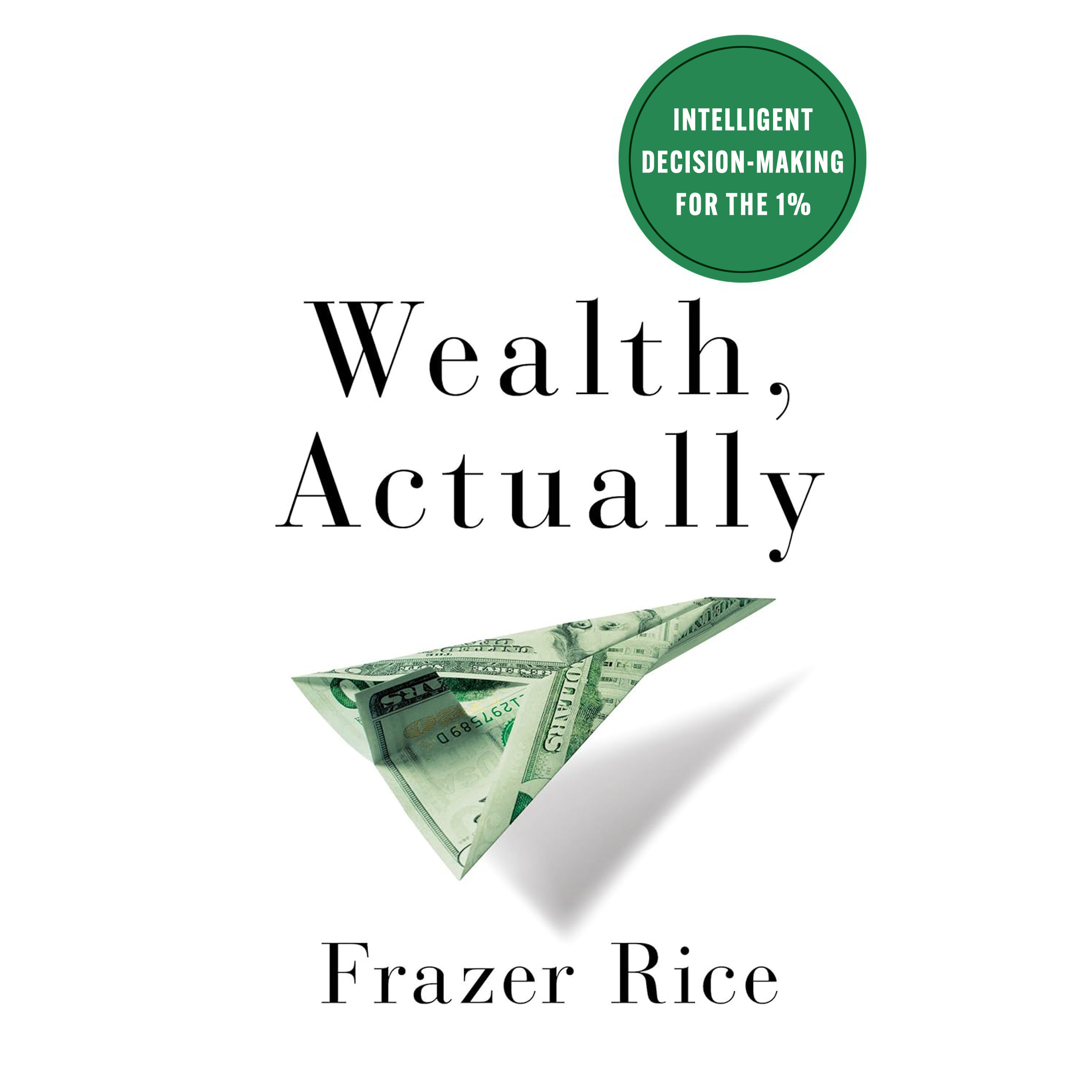
Wealth Actually
Frazer Rice
The Memo by Howard Marks
Oaktree Capital Management