
SKEPTIC’S GUIDE TO INVESTING
Straight Talk for All, Nonsense for None
About - Our podcast looks to help improve investing IQ. We share 15-30 minutes on finance, market and investment ideas. We bring experience and empathy to the complex process of financial wellness. Every journey is unique, so we look for ways our insights can help listeners. Also, we want to have fun😎
Your Hosts - Meet Steve Davenport, CFA and Clem Miller, CFA as they discus the latest in news, markets and investments. They each bring over 25 years in the investment industry to their discussions. Steve brings a domestic stock and quantitative emphasis, Clem has a more fundamental and international perspective. They hope to bring experience, honesty and humility to these podcasts. There are a lot of acronyms and financial terms which confuse more than they help. There are many entertainers versus analysts promoting get rich quick ideas. Let’s cut through the nonsense with straight talk!
Disclaimer - These podcasts are not intended as investment advice. Individuals please consult your own investment, tax and legal advisors. They provide these insights for educational purposes only.
SKEPTIC’S GUIDE TO INVESTING
Fuel Your Purpose With Adversity
Use Left/Right to seek, Home/End to jump to start or end. Hold shift to jump forward or backward.
Please text and tell us what you like
We talk with coach and author Lance Cibik about turning hardship into purpose and building financial wellness through simple systems and relentless action. From a childhood of scarcity to speaking on national stages, Lance shows how to master the basics, invest in yourself, and think long term.
• early adversity shaping money habits
• choosing change and taking messy action
• mentors, work ethic and first financial wins
• the 10-20-70 rule for giving, saving, spending
• gaps in school financial literacy and how to help
• mindset, health and communication as core skills
• advisors investing in their own growth
• mastering basics before complex products
• creating virtuous cycles for families and students
• practical examples including opening 529 plans
To reach Lance, use link below:
https://www.lancecibik.com/
For Lance Cibik book, use link below:
https://www.amazon.com/Adversity-Fuels-Purpose-Create-Success/dp/B0F6M4PQ5B
Straight Talk for All - Nonsense for None
Please check out our other podcasts:
https://skepticsguidetoinvesting.buzzsprout.com
Disclaimer - These podcasts are not intended as investment advice. Individuals please consult your own investment, tax and legal advisors. They provide these insights for educational purposes only.
Welcome And Guest Introduction
Steve DavenportHello, everyone, and welcome to Skeptic's Guide to Investing. Clem and I today are honored to have a guest. Um, the guest is Lance Cibik. Lance is a friend of mine from his days at Sun Trust and Truist. We worked together. Lance is very well familiar with the finance industry. And the main purpose of Lance's visit is to talk about his book, Adversity Fuels Purpose. And Adversity Fuels Purpose is really about an individuals trying to optimize how they live their life and how they fulfill their their destiny or their their their maximize their performance. Lance is a coach and a speaker, and he's a great guy in terms of driving people to to achieve a better self. And as we look at financial markets and we look at financial well-being of individuals, we thought it was a great connection to what we do to help financial wellness, and just to have Lance talk about what's in his book and what he feels is going on right now in in general with the situations around the markets. So, Lance, welcome. Thanks for coming on Skeptic's Guide.
Lance CibikHey, great to see you, Steve and Clem. Nice to meet you as well. There's a little shot of the book. You can find it on Amazon at Barnes and Noble. I know it's a little bit blurry, but there you go. Yep. Thanks for that plug and looking forward to our conversation this morning.
Steve DavenportSo, Lance, can you tell me like adversity? I know that you've had adversity in your life, and I know that you've had a lot of things that drove you to kind of get to your core and understand how to proceed in a way that was going to be productive and ultimately successful. Um, I think all of us could learn something about using and having more grit and determination and trying to maximize who we are and what we are. Um, I guess I'd love to kind of figure out from a financial perspective, how did you know you getting your financial house in order help you in the overall you know order of your life?
Lance CibikYeah, thanks, Steve. Uh hence the book, Adversity Fuels Purpose. Uh, it's also the title of my keynote talk that I delivered to financial services firms, sales organizations. Adversity Fuels Purpose. I think if we all pause long enough, we can relate to that word adversity. Uh we all have it in some fashion in our past or in our present. And if everything's good today, guess what? There may
Early Adversity And Money Scarcity
Lance Cibikbe some adversity around the corner. It doesn't necessarily sound an alarm or ring a bell when it's coming. As it relates to financial adversity, , since you know that's sort of the main focus of our conversation today, I'll give you a little backdrop because it'll help the listener better understand how it ties to using financial adversity to fuel purpose. You know, I was born to my mom and my dad, , high school graduates, living paycheck to paycheck, okay, working hourly wage jobs. So if you consider for a moment, the moment I took my first breath in that hospital room, the odds were stacked against me to achieve this American version of success. I wasn't born to two college-educated parents working salary jobs, high-income jobs, living in a nice neighborhood. Uh, no money was being set aside for me to one day go to college. The odds were stacked against me from a financial perspective to achieve some American dream of success. See, what I didn't know, Steve, is that four days before my first birthday, I was gonna be met yet with some personal adversity. See, four days before my first birthday, I lost my mom to suicide. Oh my god. So here I am, shy of one year old. My dad's working an hourly wage job, living paycheck to paycheck. Now I'm gonna face the world without my mom. My dad goes on to remarry. Um, I have three step siblings from that lady's previous marriage. My dad has two kids with her. So now we're a six-kid family living paycheck to paycheck. I'm growing up in middle school and high school, getting free breakfast and free lunch at school. My clothes are coming from yard sales. We're not going on nice vacations. We're dry driving used cars with no air conditioning and the windows rolled down. We're living in homes without the second floor, having air conditioning. I'm not wearing name brand clothing. So I felt a lot of that financial strain growing up as a child and a teenager, recognizing that times at home were tough. You know, times at home were tight. We didn't have surplus. You know, I wasn't wearing the clothes and driving the cars and living in the neighborhoods that maybe some of the other kids at school were experiencing. My dad and my stepmom ultimately divorced. My dad and I were living alone, freshman year, sophomore year, junior year of high school, my dad and I in our own apartment. Ultimately, my dad decides to live with a girlfriend that he was dating at the time. And I decided that I wasn't going to follow. I didn't want to go live with this girlfriend. And so here I am wrapping up my junior year of high school and my entire senior year of high school, and I'm living alone in my own apartment. I got a little bit of a Social Security check from the passing of my mom to help pay the bills. But then I ultimately, Steve and Clem and listeners, I had to decide around that time what was I going to do about it. The odds were stacked against me from the moment I took my first breath. I lost my mom to suicide. I grew up in this step family. I'm living paycheck to paycheck. My clothes are coming from yard sales. There's no surplus around. But I wanted to experience what others were experiencing in regards to financial surplus and success and clothing and cars and homes and vacations. So I talk about this in my book, but I also talk about it in my keynote talk. I had to n ber one decide to be the change. So what now what? How was I going to respond to it? It's a mindset shift for myself and for my future. N ber two, I had to go from thinking about what I wanted to be and what I wanted to do. And I had to n ber two rise up and take action, messy action, even when the future was unclear. And for me, that meant I knew if I could focus on grades and I could get
Choosing Change And Messy Action
Lance CibikA's, that could set me up to become a first generation college student. I knew that if I could work five days a week at the local grocery store and restaurant, then I could earn money that would provide me the ability to buy a brand new shirt, to buy the Nike shoes, to buy my first car at the cart auction for $600, even though I never test drove it. I knew that I could control my controllables currently and in my future through working, through financial means. And I could save.
Steve DavenportIf I was to just stop you there, how did you figure all this out? Were there any like is there any educational assets or things that you read in the library? Or like how did you how did you come to your financial knowledge and plan when there really wasn't anybody around you providing that support or advice? Or was that some was there some kind of guidance that you got from anyone? In other words, what was the light bulb moment?
Lance CibikYeah, yeah, for sure. No, I mentioned it a a moment ago. Part of it just came from within. Okay. I recognized that I did not like my current circ stances. And I recognized that other people around me, as I said, wore the nice clothes, drove the nice cars, got dropped off in the nice neighborhoods from the school bus. And I had a desire to be more like them. That's n ber one. N ber two, I started dating a girl wrapping up, like in my freshman year, and her dad was a doctor. And they lived in a nice neighborhood, and he drove the Mercedes and they took the nice vacations. And the grandfather ran his own CPA practice. And between the two of them, that gave me good role models slash mentors to look up to and to better understand that through education, through a degree, would afford me the opportunity to get the higher paying job, the higher income to be able to do some of these things. In addition to coming alongside of the grandfather, the CPA that ran as in practice, he also gave me opportunities, for example, to wash and wax his two-seater convertible Mercedes. So not only did I get a chance to earn money through work, but I also got a chance to experience, you know, cleaning and washing a nice black two-door convertible Mercedes. Like, oh wow, like wouldn't this be nice? Like not only am I working and I'm earning money, but wouldn't it be nice to one day have my own version of this type of sports car? So that was really to your question, Clem, one of the moments that started to open up my eyes to what life could look like to develop work ethic, to better understand money, the opportunity that it could provide for me and my future and my future family, and start to understand savings and investments and what is a stock or what is a mutual fund or what does it mean to follow your taxes and these types of things.
Steve DavenportDo you think the school, like, did you take an economics class or did you take any, like there was no, there was no infrastructure of financial literacy that you said, hey, I'm gonna, you know, I mean, we weren't we weren't going online when you were in high school,
Mentors, Work Ethic, And First Lessons
Steve Davenportright?
Lance CibikYeah, there was no social media, there's nothing online, there was no mandator requirement for financial literacy, there wasn't financial personal finance one-on-one class, none of that. You know, we didn't have any outside speakers or programs coming into the schools. Like part of what I do today is I'll go into those same type of schools that I grew up in, which are called Title I schools. And I would go into those schools today and I speak financial literacy as part of my talk. Why? Why would I do that? Well, because I'm expertly positioned to help serve some past version of myself. And so I recognize what it's like to be a high school student that's sitting in those schools with not a whole lot of resources. And when they go back home, they don't have a lot of good examples of people around them that are seeking to do the next right thing. Maybe they have brokenness in their family, maybe their single parent is working multiple jobs, living paycheck to paycheck. And they're thinking to themselves, well, hey, this is all I know. I mean, this is what I've grown up in. Like this is what I'm gonna become too. And so it requires, to your question, Steve, financial literacy programs and or people like me or any of us to go into those schools or come alongside of the youth to give them a shot, just to give them a glimpse of what we take for granted as common knowledge, but they have no clue about it. They don't have the same level of exposure that we may have had as kids and or even as adults.
Steve DavenportWell, that's great. I think that that's what you know. We worked out in Atlanta with our foundation. And, you know, one of the students at one of the events said, can you please slow down? I want to get all of this because I want to go home and and and understand it. And I said, Well, it's in the handout, , I'll make sure you get emailed. Like today, there isn't a lot of opportunities for some of these kids because there is people like you. And I think it's a wonderful change, but my always had my my feeling always has been financial literacy, you know, we're we're using a garden hose to put out a forest fire. I mean, the amount of people who are not exposed and not given an opportunity is too large. And and I appreciate your work in doing this.
Lance CibikYeah, a great example of that was just a couple of months ago, right here in Charlotte, North Carolina, at West Mecklenburg High School, I had gone over to do a talk with the high school students, the senior class, and they all got a copy of my book, Adversity Fuels Purpose. And part of my talk centered around financial literacy. And I just said, hey, listen, if you consider for a moment just seeking to master the basics, even at your young age, if you have a part-time job, if you make $1,000 and you decide to give 10% away, okay, if you're a believer, you follow the Bible to the word of tithing a tenth, okay, 10% away to your church or charity or foundations. Okay, let's say you take $1,000 and
The Gap In School Financial Literacy
Lance Cibikyou take $100 and you give it away. All right, cool. Then you take 20% and you save it and invest it. And I gave some examples of savings accounts, high yield savings accounts, or even investments. And then you take the remaining 70%, that's $700, and that's how you decide what kind of clothes you can buy, what kind of shoes you can wear, what kind of car you can afford, how many restaurants you can go to, how many movies you can go to. But it's only after you've decided ahead of time how much you're gonna give away and how much you're gonna save and invest. So I gave that talk to this group of seniors in a Title I high school, okay? And I came back two weeks later and I've got this on a little interview style. And one of the students said, I read your book already in two weeks. Imagine that, a high school student actually reading a physical book. And n ber two, he said he had his older sister take him down the street to a local bank and open him up a high yield savings account, and he put 20% of his recent paycheck from his part-time job. I mean, think about the power in that. He's a senior understanding to pay myself first andor give money away. And then what's left over is how I decide how much I can afford to live. And if he maintains that mindset decades from now, he will wake up in the 1%.
Clem MillerOh, I agree. How many, how many, what proportion of kids do you think actually have checking or savings accounts?
Lance CibikI ask the kids to raise their hand, number one, like who has a part-time job. And number two, to your point, Clem, do you have a savings account? Do you have a bank account? And I would say usually it's half the kids that will raise their hand to say they have a part-time job. And from there, I don't know, let's say most of not all of them probably have some form of a bank account online or you know at the local branch. But but the majority of kids, you know, I would say probably still don't have a part-time job. And that's also part of my message to them, which is like, listen, if you want to get out of your circ stances, I know some of you have it more difficult than others. You're gonna have to decide to put down your stupid phone, get off of social media, get off of Netflix. You're gonna have to decide to maybe not drink, maybe not drug, maybe not hang out with that person that's a bad influence on you. You're gonna have to decide to not sleep in. And yes, you're gonna have to get a job. Just like I did, raking people's leaves in the neighborhood, just like washing and waxing cars, just like working at the grocery store or working at the restaurant. Yes, you're gonna have to do the things that other people are not willing to do in order to create the separation. And so that's also part of what I'm trying to do is shake and wake them up to understand it's not gonna necessarily be easy, and you've got to choose your hard. Because living paycheck to paycheck is also really hard if you don't make decisions at that part of your life to understand what we're talking about today, which is financial literacy, , but then also developing good mindset and good habits to separate yourself from the pack.
Clem MillerHow do you deal with those young people who think that the future in general is
A Simple 10-20-70 Framework
Clem Milleris bleak, , whether it's you know the economy or you know, technology or politics or or what have you? When you you know, a lot of young people I know look at the future and say, you know, why, why should I, you know, it's like those folks who say, why should I have kids, right? You know, why why should I make these investments for the future when there is no future? How do you deal with those people?
Lance CibikYeah, I mean, look, it's a it's a parallel to what I say to the folks that are in my coaching practice, grown men, primarily, just like the two of you on the phone that are primarily in their 40s, their 50s, and 60s. I'm their executive performance coach. And I say the same thing to them as I might say to a high school student or college student or anybody in their 20s and 30s. Master the basics regardless of what's happening today and what the future holds. What do I mean by that? Well, I mentioned I talk about this in my book. Are you better off or worse off if you master your health? If you drank water all day and no alcohol, if you ate actual real food, organic meat, fresh fruits and vegetables, nuts and seeds, and you had a good night's sleep, you mastered your health. N ber two, you mastered your mindset, you pushed through limiting beliefs, imposter syndrome, head trash, the curse of knowledge. If we master your mindset, it's in a good place. N ber three, if you level up your communication, your public speaking, your presentation skills, how you speak when you open up your mouth, minimize fill-words, use hand gestures, point n ber one, point n ber two, point n ber three. If you can go out in any situation and talk to anybody and you know what questions to ask to engage in conversation. See, my point is yes, AI and technology clearly isn't going anywhere, despite me wanting wanting it to all go away. But in the midst of all of that, if I'm the healthiest I can be, if I'm sharpening my mindset, if I'm leveling up my communication, public speaking, presentation skills, my ability to engage with others. And oh, by the way, I'm making a commitment to my education, just like the CFP or the CEMA or the AAMS or any other training or course or program that I've taken to create separation from everybody else, then I've still then I still have a good shot of winning. So that's why I talk about you gotta one, make up your mind to be the change. N ber two, you have to rise up and take action. N ber three, you have to hustle one extra repetition than everybody else to control your controllables so that you're ready for whatever comes your way versus sitting back and just living in fear and uncertainty and doing nothing. So it's the same message I give to the high school or college students that I give to grown men and women.
Jobs, Habits, And Choosing Your Hard
Lance CibikIt's a survival of the fittest type of mentality in many ways.
Steve DavenportDo you feel that there's are you hopeful when you finish talking to these students, or do you feel like you're, you know, you're only able to touch a certain n ber because social media, society, whatever have so many messages that are opposite of what you just described. So in some ways, it is I I love the fact that the kid came back to you with the book and said that they're doing these things. And I've always been asked as the president of a nonprofit, well, how much how much impact have you had? Who did you influence? And you know, I spoke at a group of Atlanta students, the whole high school class, like you said, and you saw 150 people come in, you saw 150 people go out, there were 10 questions. I mean, I don't know how we because in order to get more for these people and these students, you need to be able to show results. And that's the part that is very hard because, you know, I don't know if someone starts a savings account and they eventually go to college and they eventually have financial wellness, you know. Um, I do 20% of the factor that got them there or 50% of the factor, does it matter? Do we just, you know, do we put the seeds out in the ground and we water them and we just hope that something comes up? I guess I'm I'm trying to figure how to do this on a larger basis. Because to me, if we don't really do it on a larger basis, what what are we gonna have? You know what I mean? Like I I don't. Want to be the you know the change for a hundred. I want to be the change for a hundred thousand, you know.
Lance CibikYeah, great question, Steve. It's something that I wrestle with all the time. But I give you a couple of rapid fire responses. Number one, let go, let God. Let go, let God. That's my self-talk. Let go, let God. N ber two. On a similar thought process at my church, Forest Hill Church, right here in Charlotte, North Carolina. The theme is bring heaven to Charlotte one person at a time. Imagine if we all had one person, okay? Then the whole world would be covered. Now you can use that whether you're religious or not religious. If we all had one person, then we would all be covered, would we not? If we all had one person, every person would be covered. Okay. N ber three, I'm a keynote speaker. I get on stages and I shake and wake people up. I get people to laugh. I get people to cry, sometimes multiple times, two or three times, and I get people fired up. As one audience member recently said, if he knew that I was speaking that day, he would not have needed coffee because when I got to that part of my presentation, he wanted to j p out of his chair and run through a brick wall. So I get him motivated, inspired, laugh, cry, fired up, think different, feel different. Now here's the question. I could be the best speaker they've ever, ever heard during that one hour. What percentage of them actually go back to their office or in school, back to their home and actually act differently, actually do something differently. And it's very few. It's a small percentage. It applies to you, Steve, you, Clem, and me. We've all been to conferences, we've all been to sales meetings as adults. We frantically take lots of notes, we're listening, and then guess what? We take that folder, that booklet, we stick it in our bag, and we go back to primarily doing the same things that we were doing before we got to that one-day, two-day, or three-day event. So you've got to give people a container. That's why I also provide coaching. You give people a container to get repetitions
Hope Amid Uncertainty: Master The Basics
Lance Cibikin to actually get true transformation. So it's got to be a combination of both. I would love to be on a stage every single day speaking to as many people as possible. And I'm going to make some impact. But I'm only going to be able to transform so many of them unless I give them a container for coaching.
Clem MillerLance, besides your own personal experience, what are some of the other things that led you to become a , or that allowed you to become a good speaker, a good coach? I mean, in a in a sort of a technical speaking and coaching sense, you know, what were some of the things that you had to learn in order to be able to do that? I mean, I'm sure it's not 100% organic. Um, there must have been some things you did to try to become the speaker and coach that you are now.
Lance CibikYeah, great question. I mean, it falls in line with where I was just going. You got to have skin in the game, time, energy, and money to get true transformation. Time, energy, money. What do I mean by that? Well, over two decades, I took Baker Communications skills, I took Sequoia Communications skills, I took Latimer Communication Skills, I took Speakeasy three times. I took the speaker lab seven-month course to understand the professional speaking business. I hired my own executive coach, Matt Doan, who I've been working with now for four straight years. So, yeah, to your point, you know, I had skin in the game, time, energy, and money so that I can work on the craft of speaking and get the 10,000 plus hours of repetitions, in addition to hiring a company like the Speaker Lab to help me understand the business and profession of speaking. And then also having a executive performance coach myself through Matt Done to help me with the mindset and the habits as a sounding board for me to be able to do what I do, in addition to coming alongside of shareyourstory.com, formerly known as Streamline Books, to come alongside of me over nine months so that adversity fuels purpose becomes an edited and published and launched book. So that's why I say lots of people think about who they want to be or what they want to do, but most people don't take action and get skin in the game, time, energy, and money to invest in themselves to also get the growth that they're looking for. So that's it. That's it.
Clem MillerUm, Lance, what are some of the myths that you encounter in your in your speaking and in your coaching? Are there any like significant myths that are out there that you try to punch back at Well, I I'm not exactly sure specifically where the question's coming from, but I'll just apply it to speaking for a moment. Yeah.
Lance CibikSpeaking is really, really hard. What do I mean by that? One, most people have zero desire to get up on a stage and speak for 45 minutes to an hour, to put themselves in a situation to be vulnerable, open, to be judged, to have some type of outcome on the line. So that's hard. You know, you got to push through mindset and nerves. Even though many speakers may may make it look easy, , they've got nerves and it took a lot of work for them to get to that stage. That's n ber one. N ber two, on the speaking side, the actual act of speaking is a very, very, very small percentage of the business because most of my time is emailing, posting on LinkedIn daily, sending people DMs, having discovery calls like this to just get that opportunity to speak. So it's less than 5% of the speaking business. Uh on the coaching side, I would say what surprises me the most, specifically in the financial services industry, and this is part of what I say to financial advisors as they're considering hiring me as their executive performance coach, financial
Speaking Impact Versus Lasting Change
Lance Cibikadvisors ask clients to pay them 1% on assets under management, monthly or quarterly. Hypothetically, for how long, Clem? Years, if not decades. So, my questions to financial advisor is typically well, who are you paying 1% to? Yeah. You know what I mean? Like, who are you paying money out of your bank account to help you level up personally and professionally so that you could be the best financial advisor to your clients who you're asking them to pay you monthly or quarterly, hypothetically for years, if not decades, which oh, by the way, is thousands and thousands and thousands of dollars. So that that's a that blows me away oftentimes in some of my prospective coaching conversations for sure.
Steve DavenportWhen when you look at the industry that we're a part of, , or we're a part of for your in your case, Lance, do you think that we're moving to a better place in terms of online education, online resources, and companies trying to operate in a better way for the you know for the betterment of their clients and less of a focus on transactions in short term? Like I've always asked about behavior. Like if we could change one behavior for our audience, what behavior would it be? And most of the time I come up with short-term thinking. Thinking short-term, not thinking longer term, you know, thinking of things that are more complex or thinking of things in a more simple model, trying to really get people to focus on gratitude and satisfaction, not scarcity. I mean, there's a lot of things that people need to do. Do you have like a tipping point that you say, hey, this is the first thing I try to get, you know, my clients or my my audience to buy into. If they can walk away with that, a lot of the other things they flow from that. What do you think is the people and getting change?
Lance CibikWell, I mean, on your financial industry question first, I would say, yes, directionally speaking, I feel like firms, advisors, investment professionals certainly have good intentions that they're trying to establish financial wellness out there. I think if I could wave a magic wand or
Crafting The Speaker And Coach
Lance Cibiksprinkle some very dust, we talked about this in pre-call, would be to help clients master the basics first. Master the basics first. As I said earlier, whether you follow this model or not, give 10% away, save and invest 20%, spend 70%. Like help them just understand mastering the basics of personal finance. Okay, cool. Check. Whether you take that investments and you put it in a 401k, an IRA, a Roth IRA, a taxable brokerage account, a college 529, just help them master the basics first and even the investments inside of those investment accounts. For example, passive index funds, just start with the basics first before you create complexity with an active solutions or an options overlay strategy or some long short equity alternative fund. You know what I mean? Like master the basics first. Get your term insurance policy in place, get your disability insurance in place, get your basic estate planning doc ents in place, minimize or eliminate bad debt first. So let's have an industry-wide push for mastering the basics, like true financial wellness. Because as we talked about in pre-call, the more complex we make it, follow the money. You know, the customer, the investor has to recognize that these companies only exist for profit. Follow the money. They're looking for ways to profit off of you. Oh, by the way, while they sell products and services. And so that hence lies into the skeptic's guide to investing. So that's one part of your question and an answer. And then the second part, you know, the same thing that shows up in my coaching practice is I'm trying to get a financial professional, financial advisor, wholesaler, salesperson, CEO to do the same thing for themselves. Like master the basics first. Like I would, you know, I told a coaching client earlier today. From the moment your feet hit the floor in the morning to the moment your head hits the pillow at night, what are you eating? What are you drinking? What are you reading? What are you watching? What are you listening to? Who are the people that you're spending time with? Do they drain your energy? Do they bring you joy? What are you doing at work? Is it inefficient, ineffective, or is it efficient, effective? From the moment your feet hit the floor in the morning to the moment your head hits the pillow at night. Are you maximizing your opportunity? We have to master the basics, master the day first for you, Steve, for you, Clem, for me, Lance, before anyone and anything else comes next. So the same principles line up there for me, in my opinion,
Industry Myths And Advisor Accountability
Lance Cibikeven in my coaching practice.
Steve DavenportYeah, one example I've had in working in Atlanta was that this group did a study on if a family sets up a 529 or an investment account for a child's college, it doesn't have to pay 10%, 5%, 20% of the college. Just the act of setting that account up and telling the child, this is what you know we're we're saving every month for you so that you can have a college education, makes it 60 to 80 percent more likely that child is going to go to college. So when you think about messaging, I agree that the fundamentals of finance you have to master if you want to succeed both emotionally, physically, and spiritually. It needs to be a cohesive plan. But I also guess I wonder, you know, do you ever get into this idea of, you know, if we set up, like you said, the first thing is that 10% that you give away. If you start to think about the goodness of what you're spreading, then all of a sudden you feel more positive and there's a positive, I go, I used to call it a virtuous circle of moving upward. And just like if you don't, if you don't take care of your body, if you don't take care of your, you know, yourself, you're gonna have a vicious cycle that moves downward. And I guess I'm still kind of, do you think there is one part of this that you try to emphasize to people that is the kind of, you know, when I when I succeed at making this point with my clients or audience, I find that they are, you know, more likely to walk away and do something than when I can't get past this point. It's harder for them to really take what I what I what I'm giving them and put it into practice.
Lance CibikYeah, well, quick comment on the five to nine piece. Most people don't know this, but even before my two kids were born, I opened up two five to nine plans. I was the account owner and I was the beneficiary. And then once once they are born, I switch them to the beneficiary. So for those listeners, if you're an advisor, great, make sure you talk to this to your clients about this. If you're a non-advisor, make sure you consider this for yourself and/or your kids, or talk to your advisor. You can open up a 529. You're the account owner, the parent or the adult, and also the account owner, and then you switch it to the beneficiary, your child that's born. So it gives you a
Mastering Personal Finance Before Complexity
Lance Cibikhead start to start investing money in that five to nine plan even before your child's born. That's number one. Uh, number two, I would say in general, Steve, whether I'm speaking or whether I'm doing coaching, and I hinted at this earlier, we can sit here and think about who we want to be and what we want to do all day. We can listen to podcasts all day, we can read books all day, and guess what? Be in the exact same spot. So, what I encourage the audience to do, as well as my coaching clients, and I talk about this in my book, is to take messy action versus no action while you figure it out along the way. Messy action versus no action while you figure it out along the way. I'll use my book as a good example. How do you write a book? One sentence at a time. Yeah. One sentence becomes multiple sentences, becomes a paragraph, paragraphs become a page, pages become a chapter, chapters become a book. When was I writing my book? At 4 a.m. I had to take messy action. I had to go to bed sooner at night so I could wake up earlier before my wife and kids, so that I could take messy action one sentence at a time, so that I could also still go to the gym at 5 a.m., then get home and be there for my wife and kids and take my kids to school. So my encouragement always to people is take messy action, just do something while you figure it out, fine-tune it along the way, having no clue how it's going to ultimately play out. That's great. And I and I think, you know, for most of us, we get stuck along the way at multiple phases of our lives, including adults. How do I know? Because I have conversations with them all the time. How do I know? Because people call me and they tell me things like, hey, I had the biggest sales year ever last year. Hey, I made over a million dollars last year. Hey, I got my biggest paycheck last week. And guess what? I feel no joy. And I feel stuck, burnt out, plateaued, bored, stressed out, misaligned, and I don't want to know what to do next.
Steve DavenportThis has been great, Lance. And I could go on like this for a couple of hours, I think. Um, but I don't know if our listeners have that in them. Um can Clem, do you have any comments or questions for Lance? And then I'll leave it up to Lance to kind of close the show with some links and some ideas on on how we can get in touch.
Clem MillerNo, no more, no, no more questions. I was gonna basically say what you said, which is what are your takeaways? What should we take away from this?
Lance CibikYeah, I usually start with just look, this is part financial literacy. This is part, you know, how do you consider your own adversity, whatever that means to you. We all wake up imperfect and we go to bed imperfect, okay? The premise of my book, Adversity Fuels Purpose, and the premise of my talk is how do we take adversity, whether that's personal or professional, and whatever that means to you, and not allow it to keep us stuck, to box us in, to oppress us, suppress us, depress us. But instead, how do we take that same adversity, those feelings and experiences from adversity, and actually use it to be the place that fuels our purpose, that inspires the impact that we can have in people's lives and in this world that, oh, by the way, can be the very place that we find success in our life, but also in our businesses, in our career choices. So my encouragement to the listeners would be consider your adversity. Don't let it keep you stuck. Turn it as fuel for purpose. We all have something. We're all expertly positioned to help some past version of ourselves. The question becomes: will we lean into that
Virtuous Cycles And Action Triggers
Lance Cibikand we maximize that in our life and in our business? That'd be my takeaway for the audience to consider. Keep pushing, keep leaning. Thank y'all for the time.
Steve DavenportThanks. Thanks for joining us, Lance. I mean, I think you were great. Um, I guess I'd like all the listeners to check out the podcast, and you'll see on the bottom of the podcast. I'm gonna put links to Lance's book and other items. And maybe we need to buy some books and give them away to some of our listeners, Glenn. What do you think? Why not? All right. Um so thanks everybody for listening. And , I hope you were inspired by Lance as much as I was. Um, I was brought to tears almost a couple of times, and I did feel a lot of joy in what he's doing because I think it's you know it's what the world needs. We need a lot more Lances to to battle in this environment where sometimes we feel alone. I think it's great to have somebody out there moving us forward and making us making our lives better. So let's all move to financial wellness together. Thank you. Have a good day. Thanks, Lance.


Podcasts we love
Check out these other fine podcasts recommended by us, not an algorithm.
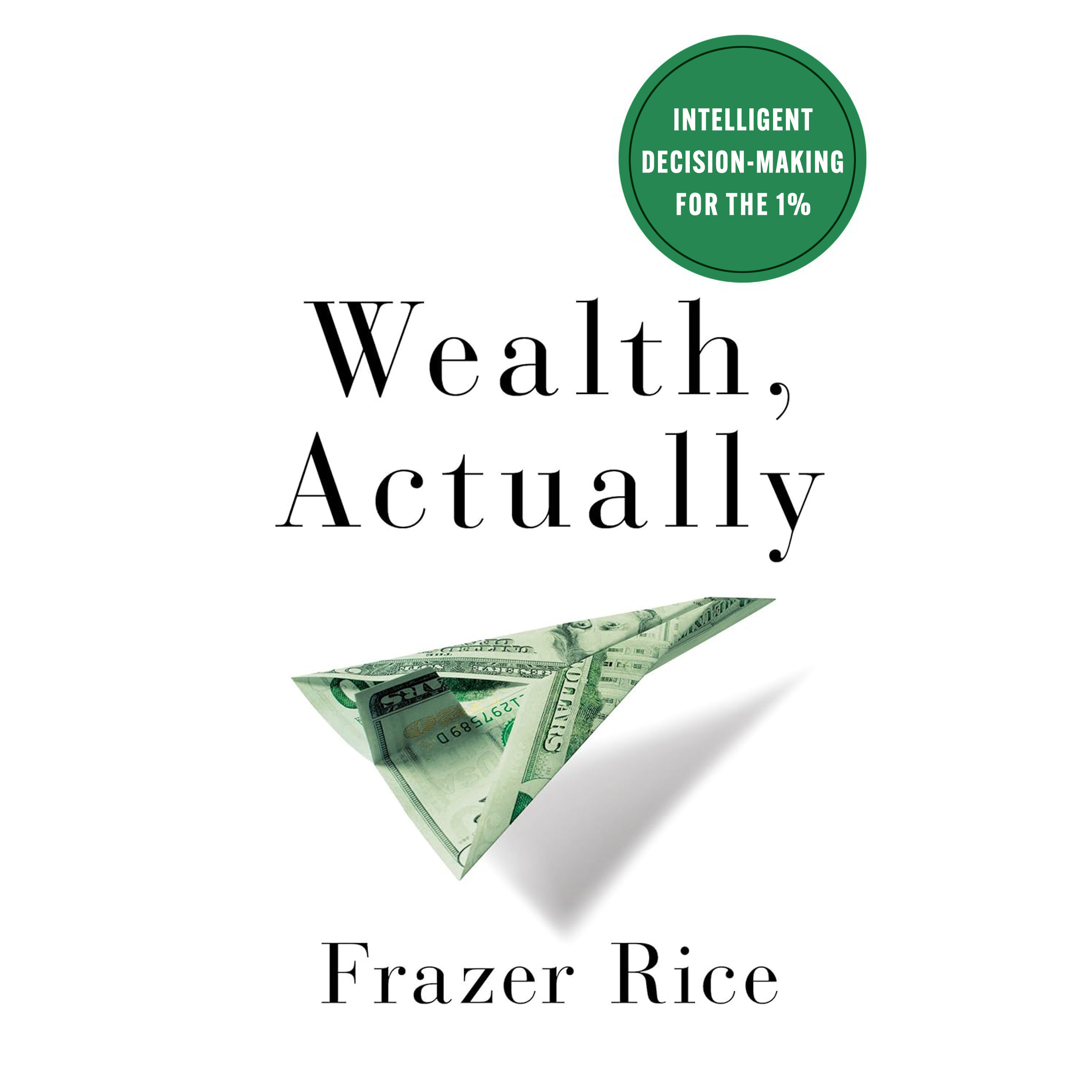
Wealth Actually
Frazer Rice
The Memo by Howard Marks
Oaktree Capital Management