
SKEPTIC’S GUIDE TO INVESTING
Straight Talk for All, Nonsense for None
About - Our podcast looks to help improve investing IQ. We share 15-30 minutes on finance, market and investment ideas. We bring experience and empathy to the complex process of financial wellness. Every journey is unique, so we look for ways our insights can help listeners. Also, we want to have fun😎
Your Hosts - Meet Steve Davenport, CFA and Clem Miller, CFA as they discus the latest in news, markets and investments. They each bring over 25 years in the investment industry to their discussions. Steve brings a domestic stock and quantitative emphasis, Clem has a more fundamental and international perspective. They hope to bring experience, honesty and humility to these podcasts. There are a lot of acronyms and financial terms which confuse more than they help. There are many entertainers versus analysts promoting get rich quick ideas. Let’s cut through the nonsense with straight talk!
Disclaimer - These podcasts are not intended as investment advice. Individuals please consult your own investment, tax and legal advisors. They provide these insights for educational purposes only.
SKEPTIC’S GUIDE TO INVESTING
Thankful Investing: Wellness, Tech, And Resilience
Use Left/Right to seek, Home/End to jump to start or end. Hold shift to jump forward or backward.
Please text and tell us what you like
Gratitude can be a powerful investing edge. We open with what matters most—health, family, and the gift of time—and show how a calmer life widens the gap between impulse and action. That space lets us think in seasons, not seconds: read more deeply, travel for perspective, and build portfolios that can withstand surprise. From there, we pivot to the markets we’re thankful for, spotlighting a technology arc that’s reshaping the real economy. Custom chips, advanced lithography, and AI moving from tool to advisor create durable moats and new cash flows. This isn’t the old dot‑com play where clicks replaced profits; earnings and margins now anchor the thesis, even if some names have run ahead of themselves.
We get honest about risk. Trimming concentrated AI winners, keeping cash ready for pullbacks, and holding gold as ballast form a simple, resilient playbook. We compare global prices through travel stories to make inflation tangible, then credit scientific breakthroughs like mRNA vaccines and GLP‑1 therapies for improving both lives and economic stability. Despite policy noise and tariff headlines, markets have shown surprising resilience—another reason to respect liquidity and stay skeptical of crowded trades. We also champion the humble 401(k) for compounding discipline and urge caution before stuffing complex private equity into retirement menus without strong guardrails.
Across it all, a theme emerges: align money with meaning. Use gratitude to set pace, define purpose, and choose when to act. Own quality growth with valuation discipline, keep dry powder, and let compounding work while you live the life you’re funding. If this conversation sparked a new habit or helped you tune out the noise, share it with a friend, subscribe for more thoughtful finance, and leave a quick review telling us what you want us to tackle next.
Straight Talk for All - Nonsense for None
Please check out our other podcasts:
https://skepticsguidetoinvesting.buzzsprout.com
Disclaimer - These podcasts are not intended as investment advice. Individuals please consult your own investment, tax and legal advisors. They provide these insights for educational purposes only.
Setting The Thanksgiving Theme
Clem MillerHello, everybody, and welcome to Skeptic's Guide to Investing. , this is Clem Miller. I'm here with Steve Davenport. and today in this episode we are going to be talking about what we're thankful for considering that a week from tomorrow is Thanksgiving in the United States. And so it's worthwhile talking about Thanksgiving. And we're gonna talk not just about what we're thankful for personally, but also what we're thankful for in the markets. So, really those two different areas we're going to be talking about. And so let me let me start off by asking you, Steve, what what are you thankful for in you know personally, and what are you thankful for when it comes to the markets?
Personal Gratitude And Wellness
Steve DavenportWell, thank thanks, Clem. , I'm thankful for you as my partner on these podcasts. I think we've you know you were gone for a month there in Japan, and I I had to hold down the fort and try to keep things going um at the skeptics guide, and it was you know, it was a challenge. So it's good to have you bearing the load with me on these pieces. I guess I would say that um personally I think that um of yourself and I think about my overall wellness, and part of it is you know mental, part of it is physical, and part of it is um spiritual. And I would look at myself and say, right now, um, you know, we just finished a big project at our house, putting a porch on the back, and we're sitting at looking at the leaves change here in North Carolina, and we're feeling pretty good about you know where we are and our kids coming to visit for Thanksgiving. So we're you know, we're feeling good in terms of overall wellness. , I think that what I what I like to do is to just break it down into something simple, which is, you know, um we we have a a very good opportunity right now in this market to to preserve and grow what we have. And I think that personally, um, you know, there's always something on the horizon that you're looking at and trying to figure out what you should do. And I think it's the same in markets, right? I think that we can look at the present and say, okay, here's the balance sheet, here's my, you know, overall for Davenport and Co. Here's my, you know, the value of my assets, the value of my liabilities, and you know, how are all of my children doing? , I I find that they're the biggest investment I've ever made, and they're the things that I think about every day as I think about how to how to make things better. So in my mind, um, you know, all my kids are doing great. , my son just came back from Thailand and he was there for two weeks or almost 15 days when you had the travel time. And , you know, he was flying back from Riyadh and he went around the world that way. And it's it's kind of an interesting world when you think about you know everything going on and you know, how do we travel safely? How does he get through airports? You know, he tells me about you losing his ear earbuds in the conveyor belts when he was trying to get the things through in the the checkpoints. And I I just think it's an amazing process. You know, he was telling us about a dinner he had at, you know, um, and he said, Yeah, you know, we could go out for dinner, and the two of us would have, you know, three entrees, a couple of appetizers, and a couple of sodas, and the whole bill was $10. And he says, coming back to America, he says, this food cost is just killing me. And I I tried to take that with a grain of salt, but I think it's interesting how he looks at the basics and how we could survive in Thailand, um, even in the touristy sections, versus um the life we have here in America. It is expensive. And I think that you know, we can be thankful for all the choices and all the access to different things, but there is a question about costs and inflation. And I think when we travel, we get a perspective for what's going on in the rest of the world and how what we have and what we do fits. And I think it creates perspective, and I'm glad, you know, he's we're looking forward to going through his pictures and and and seeing the different areas. And , I was surprised that he didn't give it a higher mark. I've heard of Thailand being a beautiful place to visit, and he only gave it like a high six or a low seven. And I, you know, asked him what did he think about um, you know, compared to his other trips in Japan and Iceland and Hawaii, and he put Hawaii ahead and he put um Japan and Iceland ahead. So I think it's interesting that we all have different ideas of paradise, right? And we all have different ideas about what other people are doing. And the thing that I realized is I really enjoy the fact that my children are traveling. And my daughter went to a wedding in South Korea, or my other daughter went to a conference in um Turkey. So it's it is a becoming a much smaller world. I think that the information and the opportunities we have to listen on and learn about different cultures, I think it makes us um better people. And travel in my mind helps open up the mind and helps you think about how and what is important to you. What do you think about what's important and personal gratitude? Do you have anything to jump out at you there? Traveler boy.
Time, Retirement, And Purpose
Clem MillerWell, I would say that um I am very grateful, you know, being in retirement now, I am very grateful about the fact that I have a lot of time that I didn't have previously when I was working. I used to be something of a workaholic. I wouldn't take off a lot of time. I would always have my phone on to answer things while I was away. It was just , you know, it was what I was used to, right? When the pandemic came along, and as bad as the pandemic was, and it was horrible, and I don't want to take away from the horrificness of it, , it kind of opened my eyes to you know some important things. And you know, I could spend an hour here talking about all the things that are important, but one of the things that it really opened my eyes to is the value of time and how time is is so important, and you know, to to you know, take advantage of walking around nature, , to spend time relaxing, , to spend time reading and writing and um you know doing things that are interesting to you, like my teaching my class at Georgetown. Very interesting to me to do that. travel. I've tried to get a lot of travel in this this year. I pretty much have been away for almost two months. earlier this year I was up in Canada um looking at puffins, icebergs, and whales in Newfoundland and Labrador. And and then this fall I was in in Japan for a month. so in Tokyo and Kyoto, which is probably one of my favorite places in the world, Kyoto. so so I love the time. you know, the time is super important. It's time I wouldn't have had had I continued to work. And and honestly, you know, I think a lot of people when they're working, you know, they don't they can't envision themselves having enough money to retire on. And it's actually not as bad. it's actually pretty easy to retire, I think, to tell you the truth. Maybe I'm just lucky or maybe I'm just skilled or some combination of that. But I just feel like I just feel like it's it's not that difficult to to to manage retirement and to afford retirement. I can see why some people would I can see why some people would say, well, what am I gonna do in retirement? And certainly there are people who you know retire and they've got absolutely nothing to do. And you know, my biggest advice of all for people in terms of thinking about retirement is really think about what you're gonna do. Right. I know some people say, Oh, I'm gonna do some woodworking. Oh, that's that's BS. You gotta you gotta think about things you really enjoy doing. And I think those people who have known me the longest know that , you know, getting involved in you know, analyzing things and writing things and teaching things are really things that that I enjoy doing. And I get an even bigger chance to do these now than I ever did, you know, during my work life. So I think that I think that I'm grateful for you know for all of those things, , and family, of course, right? but you know, I can't, I can't, but you know, in terms of our limited time here, I wanted to be you know grateful for retirement.
Markets To Be Thankful For
AI Boom, Risks, And Resilience
Steve DavenportNice. I mean, I I look at um the next question, which is a little harder, which is , what are we grateful for in markets? And what do we think about things that, you know, I I know we have ideas of risks and things, but I overall um I I I look at the technology boom that we've had, and it comes from a lot of great companies that we have located in the US, but also great companies like TSMC and ASML around the world. So to me, the you know, the deep, deep thinkers at some of these companies who are thinking forward and even going into the whole quantum space, I I I think it's an exciting time because I think that these companies are going to get rewarded by the ones who have the better designs and the better software. And I think it's a kind of , you know, internet 3.0. If we, you know, the first internet was, you know, okay, it was over dial up, and then the second invalid, you know, was over 4G, 5G, and more images and and than we ever thought possible being transmitted across all the different platforms. And I think now we're into the third generation, which is the computer as aid or as advisor. , and I think that it's an exciting time. I don't think it, you know, I think there is room for fear, but I also think there's a lot of room for success in terms of, you know, would it be nice for me to be able to say to Alexa, hey Alexa, tell me what my, you know, what my medicine is for today and what I need to take. You know, tell me, you know, and have have these ideas about, okay, , you know, I just got an a nudge to to buy some more fresh vegetables today. And you know, I I think that we're getting to an age where there's going to be a lot of ways that our the quality of our life can be improved. And I I think that we always talk about job losses, but what about enhancements? I mean, are there gonna be enhancements to our life as we go forward? I think you and I, being old dogs, we'll probably see some, but I really look at my children, you know, in the 20s and 30s and think their world at 62 is gonna be a lot different than mine. I think there's gonna be a lot of um things that happen over the next 20 years that are gonna be transformational in people's lives. So I appreciate that the markets are trying to think into the future and trying to get an advantage, and they're not laying down and saying, well, that's not my job. You know, Google is saying, hey, if we want to be great, we have to have our own chips. Okay, you know what I mean? Like the companies that have figured it out, just like when the you know, we talk about technology in the terms of the auto taking over for the horse and buggy, I think that, you know, we talked about the computer taking over for the mainframe. I think we're, you know, in one of those kind of once in a hundred years type of change. And I think it's you know gonna be interesting to see what and how it affects the lives of others. And what I would say about being thankful personally and for markets is that we have to stop and appreciate it. , I think we have to stop and appreciate, like you said, we have the time to go for a walk or do some meditation or read a book or an article on something that's more than 10 minutes. You know, it used to be I'd I'd speed read through articles because I felt like I had to read it, but I really didn't have the time to fully digest it. And now I think I have a little more time to do that. So in my mind, I think we're, you know, we're kind of in a great point in our lives. We're very fortunate. I realize I, you know, I didn't think I would ever be here when I was 32 years old and starting out in my career and trying to figure out whether I want to be an engineer or whether I want to be in finance. And , you know, I'm very happy with um the result. But I guess I'd say for our listeners out there who are interested in financial wellness, um, you know, I I think we should all be thankful for the 401k system. It's a great way for companies to contribute to your retirement. I realize they're they gave up a payment to us in the pension form of a pension that was even better. But I do think that for people who, you know, have the discipline and can do something with their other assets, , I think the 401k and expansion of the 401k is a great thing. I think that maybe adding private equity with some kind of guardrails around it. I don't know. I I think it involves a lot more risk than people are familiar with. And I think it's probably getting the last you know gasp of those assets that are chosen are not the assets that got chosen by CalPers and not the assets that got chosen by you know the different foundations and endowments. It's you know, these are what's left for the people who are you know at the lower end of the food chain. but look look, it overall markets up 21, 22, and I don't know what this year will end up. , we've had a good run. And I think that good runs are usually a signal to, you know, put a little aside and you know be willing and able to sustain a downturn. So I guess I'd say as we head into Thanksgiving, I'm thankful that markets are as liquid and have been as strong as they've been. , and I'm hopeful that they're gonna continue to deliver new solutions for people, you know, like we haven't talked about the GLP and the you know obesity drugs. But I think it's a what we said was the human genome, when it gets mapped, we're gonna find and discover things. And I think this is a big example of how some people's lives can be improved for you know diabetes and other weight management stuff. So I'm pretty happy with the overall. , you know, there's a lot to be thankful for. And I don't know, I just wrap it up by saying that I I think we're in a um a golden age, really. So I think that all of us should be looking at ourselves and our situations and saying, you know, what can you do to make them better? But boy, there's there's really some good things happening. How would you wrap it up, Clem?
Clem MillerWell, I mean, one thing I w I w I would be remiss if I didn't mention the fact that things would look a lot different in society and the economy and in markets if we had not invented the COVID drugs. I can't imagine what society would be like had we not had fast implementation, fast development and fast implementation by Pfizer and Moderna and the others of those drugs. even even with the development and implementation of those drugs, you know, we have a society that was to some degree damaged, I would say, by the whole COVID experience. it could have been a lot worse. Could have been far worse. So I think I, you know, it that's not a 2025 development, those drugs, but it's you know, it's it's a it's a persistent positive benefit, regardless of what Maha people might say or or what. right. we're in a much better place right now um you know, about those drugs. And it even allows people to look back and say, well, did we really need them? Well, that that tells you that we did need them. The fact that they they have the the leisure of being able to go back and and make that kind of judgment. So I'm pretty happy about that. , you know, my I think the I think it's about markets.
Steve DavenportAre you happy with markets? Yeah, I think I think this is I mean you're you you've been in gold, and gold is up 50% with an average return of seven. So I don't know how you can't have gold on your list of things to be happy about.
Clem MillerI'm very happy about my gold holdings. and I'm very happy about my AI holdings, , although I've been trimming them over the last couple of months, as I've been mentioning on this program, on this podcast. I have been trimming them. I'm a little nervous that you know the market is getting out over its skis with regard to some of these AI stocks. I do believe that it's you know it's a long-term benefit AI. I believe that there will be further rounds of growth in this. It's not the , you know, this is not the internet bubble, right? The internet bubble, you know, 2000, 2001, that was all about eyeballs. Yeah, eyeballs, clicks, stocks that that had no profits. You know, we have profits, we have growth, we have long-term growth prospects. It's just a question of whether valuations are too high. And , and I think that because of that, we're going to see some pullbacks now and then. , I'm a little concerned that what we're seeing right now might be the beginning of one. I'm not a hundred percent sure, but it could well be the beginning of one. But I have a lot of cash, I have a lot of gold. that's stuff that I can translate into purchases of stocks, you know, if the markets pull back. So I mean, I I think it's healthy.
COVID Innovations And Portfolio Balance
Steve DavenportI mean, I've said all along that I don't like seeing everybody on one side of the boat. And I think that people now are starting to, you know, and I I don't know whether the selling in crypto is a sign of more reasonable holders. I don't know if it's a sign of, you know, people who are using margin to buy crypto are now seeing their underlying names go down. And so they have they want to sell their long, you know, their crypto positions because they've had a nice run from the 40s to the 120. , you know, we've seen a good more than 20%, you know, decline in crypto. And I think that if you look at the riskiest asset, I'd put that there because of the lack of earnings. And um I think that's like you talk about have high multiples, but at least it's multiples on real earnings and it's not you know fictional. So um, you know, I I think we're in a pretty good place. And I guess.
Clem MillerOh, let me just say, Steve, one more thing um, you know, before we quit, which is that you know, the the great performance we've had from the stock market this year has surprisingly been resilient in terms of being able to not be too overly influenced by all the policy developments and confusion that comes out of Washington. So you could have had a lot more chaos. you know, you had the chaos on the original tariff announcement, the so-called Liberation Day, , but there's been so much chaos that I think markets have shown some resilience to that. And I'm you know, I'm quite happy about that.
Steve DavenportYeah, I think the last person, I guess, or the last group I'd like to thank is our listeners. we're now up to 110 episodes. we've been doing this for two years, and it feels like there's a you know, there's a real um joy when we get together and talk about these ideas and try to toss around and try to give people who are trying to improve their financial wellness um something to think about. And I think we've tried to deliver a timely discussion and we've tried to deliver, you know, um some yin and some yang and some, you know, quantitative and some fundamental and and a little bit of everything. And I'd say thanks to the listeners for sticking with us, and we've tried to talk to more guests, and you know, as always, this is your show. So let us know what you think. And we've got a survey out there under Clem um about what type of things you want us to to focus on in the new year. So give us your thoughts, give us an email, give us a text, let us know what you think. , and I guess I'll call it a call it a day. Thanks for listening, everybody, and we appreciate you and we want you to have the best. Happy Thanksgiving, and just enjoy wherever you are, whatever you're doing. Take a moment and just feel some gratitude, and I think it's a great time of year to remind us. after the harvest in the fall with the leaves falling, it's you know, there's a lot to think about this year and a lot of things in people's lives. And , I think everybody should have a great Thanksgiving. Okay. Have a great Thanksgiving.


Podcasts we love
Check out these other fine podcasts recommended by us, not an algorithm.
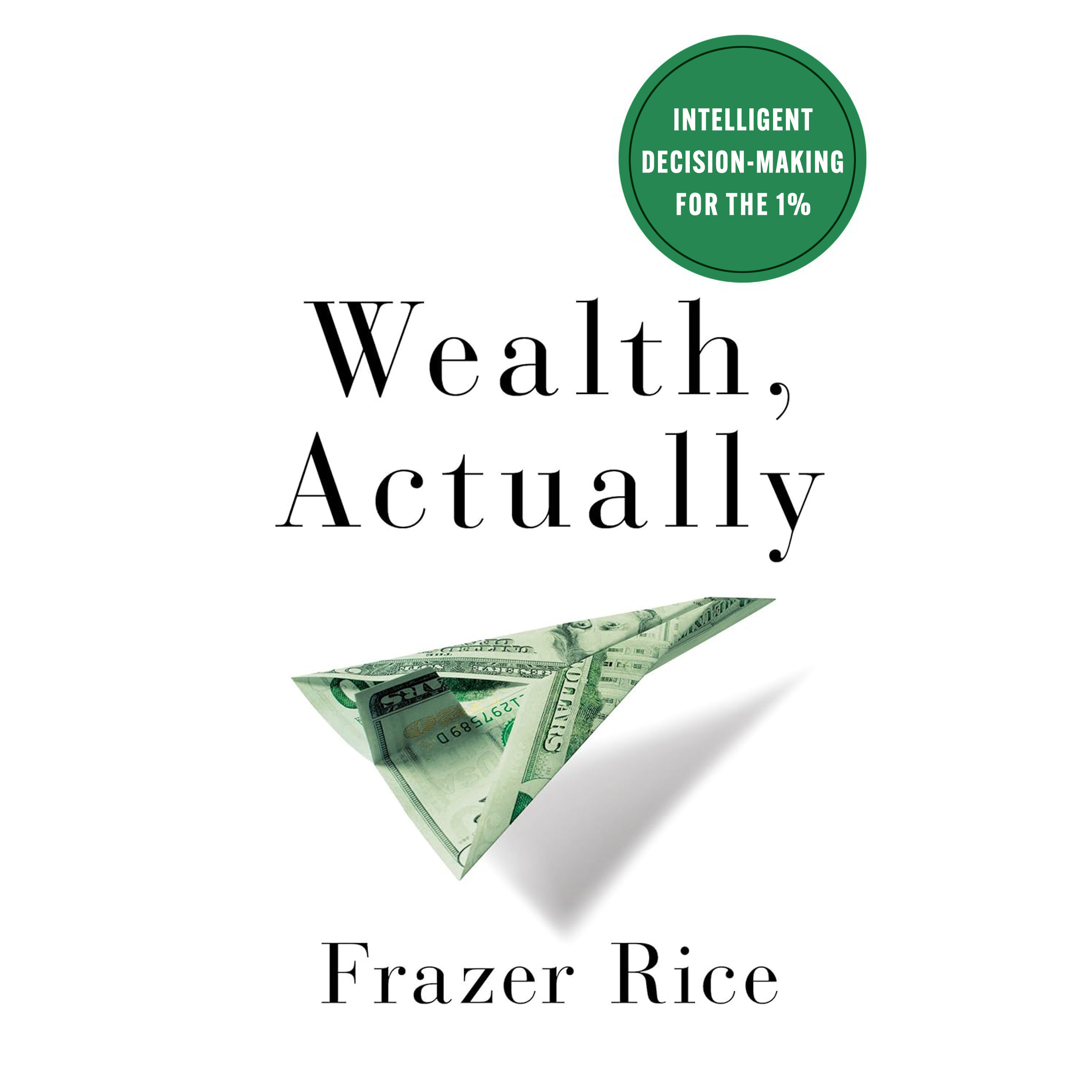
Wealth Actually
Frazer Rice
The Memo by Howard Marks
Oaktree Capital Management