
SKEPTIC’S GUIDE TO INVESTING
Straight Talk for All, Nonsense for None
About - Our podcast looks to help improve investing IQ. We share 15-30 minutes on finance, market and investment ideas. We bring experience and empathy to the complex process of financial wellness. Every journey is unique, so we look for ways our insights can help listeners. Also, we want to have fun😎
Your Hosts - Meet Steve Davenport, CFA and Clem Miller, CFA as they discus the latest in news, markets and investments. They each bring over 25 years in the investment industry to their discussions. Steve brings a domestic stock and quantitative emphasis, Clem has a more fundamental and international perspective. They hope to bring experience, honesty and humility to these podcasts. There are a lot of acronyms and financial terms which confuse more than they help. There are many entertainers versus analysts promoting get rich quick ideas. Let’s cut through the nonsense with straight talk!
Disclaimer - These podcasts are not intended as investment advice. Individuals please consult your own investment, tax and legal advisors. They provide these insights for educational purposes only.
SKEPTIC’S GUIDE TO INVESTING
Fed Cuts, Markets React, Doubts Rise
Use Left/Right to seek, Home/End to jump to start or end. Hold shift to jump forward or backward.
Please text and tell us what you like
A surprise rate cut without fresh data sounds bold on the surface, but the real story lives in the yield curve the Fed doesn’t control. We unpack why trimming the short end won’t guarantee cheaper mortgages or easier financing, how long-term yields respond to inflation expectations and Treasury supply, and where tariff rulings at the Supreme Court could tilt the outlook. Rather than chasing a tidy headline—“rates down, stocks up”—we map the messy mechanics that set borrowing costs and valuation multiples.
We also dig into the signaling game around central bank independence. When data is delayed and contested, forward guidance becomes both shield and compass. We talk through what a potential rollback of broad tariffs might mean for inflation and growth, how a sticky inflation path could keep long yields elevated despite cuts, and why the market’s AI-fueled optimism still runs through the discount-rate math. From mortgages and capex to equity risk premiums, the key forces sit beyond the overnight rate.
Our skeptic’s playbook centers on you, not the news cycle. Start with goals and cash flows, then match duration and risk to time horizons. Watch the 5-year and 10-year yields if you care about housing and valuations, stress-test for a no-cut December, and keep a margin of safety if long yields jump. Discipline beats prediction when policy, courts, and data collide. If this breakdown helps you think clearer about your plan, follow the show, share it with a friend, and leave a quick review—what’s the biggest curveball you’re preparing for next?
Straight Talk for All - Nonsense for None
Please check out our other podcasts:
https://skepticsguidetoinvesting.buzzsprout.com
Disclaimer - These podcasts are not intended as investment advice. Individuals please consult your own investment, tax and legal advisors. They provide these insights for educational purposes only.
Hello, everyone, and welcome to Skeptic's Guide to Investing. I'm Steve Davenport and I'm here with Clem Miller. And we're going to talk to you about the Fed and the decisions yesterday to lower rates and to give us a little bit of a surprise. Um, the Fed is usually very transparent and everybody understands what they're going to do for the next two or three meetings. But yesterday they gave us a little bit of a curveball. What do you think about what the Fed said yesterday regarding December not being exactly what the administration and a lot of the market wants, which is another it cut? I thought the Fed left everything in the hands of uh the administration to tell them what to do and when to do it. Is it is that not the way it's working, Clem?
Clem Miller:No, and I think that in this case they're trying to temper all those economists who think they're gonna be like six rate cuts in a row or five rate cuts in a row. The Fed is saying, no, that's not necessarily the case. It could be just one now and then a gap and then another, you know, and a couple couple of you know sort of mid early to mid-2026, and then maybe one later 2026. You know, they're they're not um you know, they're not uh obeisant to the president, and you know, they're not trying to do what the economists are are saying. They're not following the leads of the private sector economists. Uh I think uh if anybody was thrown a curveball, it was the uh you know the macroeconomists who are you know who were pretty convinced that we were gonna see a a round of uh a round of you know several rounds of rate cuts. Now it's worth noting why did these economists think there would be rounds of rate cuts? Because they see the economy starting to weaken. And apparently the the Fed is not 100% convinced of that. Uh you know, they they look at some recent weak data, of course, they mentioned that. But is there going to be more weak data? You know, they're they're waiting to see what the data actually looks like. And right now, the government isn't producing uh much data because you've got this government shutdown that affects the statisticians. And even on top of that, you have this, you know, this uncertainty about uh the accuracy of the uh of the data that's coming out of BLS. Uh, you know, the one uh guy they nominated, the the Heritage Foundation uh economist, so to speak, who was nominated to be the head of uh BLS, uh he had to withdraw uh because uh he was seen to be too extreme. So it's a good thing he wasn't uh nominated because then you didn't really have to question the data a lot. But I think you still have to, you know, under the Trump administration, now that they've identified BLS as a source of their angst, uh, I think uh I think one has to question you know the accuracy of that data going forward.
Steve Davenport:So I think that I mean, I hate to say this because I know that it's a little bit of heresy to for anybody in this business to question rate cuts because rate cuts are good for market values and everybody wants higher market values, right? We all want as a society to see the markets continue to go up and to the right. And I do too. But I also don't know if the Fed should be sitting on this uh position of always trying to satisfy markets. I thought that their original goal was to help the economy and unemployment and lower inflation. And if there is a third, you know, um I I think the markets are a tertiary or more goal. So I don't think, you know, the the entire population is not in the market. So I don't know how you can say we're helping the American people by helping the markets, we're helping the people who have a lot of equities. So I have a little problem with if the data is not there and if they're having trouble with data and it's making them uncertain, they made a pretty quick vote to lower rates, and they haven't had data for a while. So I'm not sure I'm buying into the whole we're doing this because of the data. I kind of wonder if they're doing this as a statement to the administration that we will not be influenced by what you want. We're still here to defend the dollar and some of the things that are important to the economy. I mean, could they be it? Seemed like Powell caved quickly in before the September meeting and his Jackson Hole speech, and seemed to be entirely on board with what the administration wanted, and now he seems to be stepping it back. Is this is this about a power uh struggle, or is this really about the data fun?
Clem Miller:Well, it's about data, plus it's I think it's a little bit about but they haven't had data. Right, I know, I know. It's no, it's the absence of data. It's the absence of data that's they cut.
Steve Davenport:My point is that they made a cut yesterday and they didn't have data. Yeah, talking about in the future, but well, if they don't have data and they're thinking there's a problem, then it was a problem yesterday, wasn't it?
Clem Miller:Yeah, they're living off the old data, basically, Steve.
Steve Davenport:But you just told me that you think the old data is questionable.
Clem Miller:So how well no, the I guess I don't understand as time goes as time goes, as time goes on and the the you know the lack of data be you know gets to be a compounding problem, right? Then there's less certainty about what's going on with the data. So it's it's not a it's not a uh a problem where you you know if the data is shut off, you know, you uh are completely unable to make decisions. It's a compounding problem where a month from now the fact that there's no data is going to be worse than it is now, and two months it's gonna be worse than it is now, three months, even far, even more worse. So that's that's the issue on that. But back to your to your latest question about uh whether this is a power struggle or not. Um I I agree with you that what they're trying to do is they're trying to emphasize Fed independence. I really think that's an important um part of of what they are doing. I think that uh they see that the administration is somewhat um distracted by some other things. And so and so now uh I like the word fickle.
Steve Davenport:You ever heard the word fickle? I think that kind of tried, you know. I would say on Friday they're one thing towards China, and on Monday it's like the sun has come out and everything is glorious in China again. So I I call that fickle.
Clem Miller:And so it's a perfect opportunity to uh just sort of get in a statement about Fed independence uh when there's so much else going on. Of course, you know, Trump might look at that and say, Well, you were trying to undermine my trip with Xi uh out in Korea. Um, so you know, maybe there'll be some kind of true social out of the the White House on that, but um you know, but but but we'll see. Um in any case, the market. Uh I was looking at it this morning and you know, looking at it now, I bet you the market's down. Um, let me see. Oh, actually it's yeah, market's down. Markets down. I'm up. Markets down.
Steve Davenport:I forgot this this episode is all about you.
Clem Miller:I like I like I like I like when I'm up and the market's down. Um, so so can we think about the investors that listen to the podcast and stop talking about you and your network?
Steve Davenport:Um so I have an important question, Clem, that we don't really get to wear.
Clem Miller:Wait, wait a minute, wait a minute, wait a minute. You hold your question for a second. I just wanted to mention one thing, and that is I think that one of the reasons why the Fed is being a little bit um uh uh not wanting to talk about uh another rate cut yet is because the Supreme Court is going to be talking about um going to have oral arguments on the tariffs uh in a couple of weeks. And I think they're gonna want to see how that goes. Because if the if it looks like, based on the conversation at the Supreme Court, that uh Trump's tariffs are gonna get overturned, that creates a different um economic scenario uh than if it looks like the Supreme Court is gonna uphold them in some sense. I I still believe that the Supreme Court is going to overturn them. Uh for the most part. I think there are certain areas that they can re that you know that uh they may make some I don't know, exceptions or reinforce some older laws, like for example, the steel and aluminum. That's actually allowed under law to have uh you know the the president um apply those tariffs, you know, without having to go back to to Congress. But uh, you know, some other things, these new reciprocal quote unquote tariffs, the fentanyl quote-unquote tariffs, all those things are kind of new things that that depend on uh the willingness of the Supreme Court to allow emergency powers along the lines of economic sanctions uh to apply to uh to tariffs. When tariffs have always been about you know collecting revenue and about leveling the playing field competitively. So I I I still don't think they're gonna agree to that. I think when the Fed, if the Fed sees a conversation that goes against tariffs, I think that might actually be positive. I know Trump would say, oh, it's so negative that the Fed that the Supreme Court's turning them down. I don't think so. I think it's gonna be a positive for the economy if the Supreme Court does that. And I think that uh that will influence it.
Steve Davenport:Yes. And so I I think I think it's you know, I think there's so many things that can go on between now and the December meeting that I think uh a little bit what what Powell is doing is just putting a defensive statement out there when he controls the message, which at the press conference that's what he's supposed to do. He's supposed to be clarifying and and making things more understandable so that the Fed's not doing something that will surprise. And I think by saying this, he's setting the groundwork for um, you know, the fact that, hey, there is a lot of uncertainty. And I honestly, I mean, do you think I I think there's issues of the shutdown, there's issues of China, there's issues of Supreme Court and tariffs, there's a lot of issues going around. But I thought we could kind of segue for a moment into the idea of what do they really mean when they say rates are coming down, therefore it helps businesses, it helps individuals with home mortgages. And why that might not necessarily be the case. I mean, the simple assumption that everybody's making is if the Fed thinks about the curve, and we talk about the interest rate curve, and really what it is is what are interest rates across different durations? And duration we mean time. So the short-term rate, the three-month, the nine-month, um, the T bills, the one year, the three-year, the five-year, which is where a lot of businesses borrow, and then the 10-year, which is key for mortgage rates. We're making, or the market and the media is making the assumption that a quarter point cut in the short end is going to mean a quarter point across the one year, the three year, the five year, the ten year, and the twenty-year. That it all shifts in one big move, and it's all consistent across each duration. And I think you and I know that's simply not true. That doesn't happen exactly. It's it's it's a lot more complicated based on supply and demand and what treasury issuance is going to be, and what different pensions and and insurance companies need in terms of duration. So there's there's other variables, and it's not as simple as Fed cut equals lower rate for everyone. And and I think we're um, you know, I think this is another case of uh the attention span of the average investor being shorter, and everybody wants to explain to me well, what does the Fed matter? Okay, I'll tell you, low rate, good for market. And and I think it's a little bit, I don't know, insulting.
Clem Miller:That's not what you're saying, is that's not the end of the story.
Steve Davenport:You know, the I think it's I think it's I think it's a an attempt by the Fed to do something, but it is far from, you know, it's far from absolute control over the curve. They control over the short rate.
Clem Miller:That's it. Let me reinforce, let me reinforce again for those who who may not really understand interest rates and rate curves, is that, you know, as Steve was saying, there are multiple types of rates by term. And the Fed only controls the short-term rates. Okay, they only control the short-term rates. They do not control the long-term rates, uh, which are determined by the bond market. And while short-term rate changes can have some influence on the bond market and on longer-term yields, longer-term rates, uh, those can be, those influences can be quite modest. And really, there could be uh there would be a greater um the greater driver on bond markets is really long-term inflation expectations. So if it's expected, you know, if you've got a situation where tariffs continue and inflation is expected to rise, uh, you know, this would have an impact on making bond yields go up. And you know, obviously bond prices go down, uh, but bond yields go up, which would be, as Steve was pointing out, bad for mortgages and other uh other long-term uh debt instruments. Also, to the extent that to the extent that investors, stock investors look at bond yields as a discounting factor for long-term cash flows, it's actually not that great for the uh for the stock market either, um, at least some elements of the stock market.
Steve Davenport:Right. I think I guess I'd say to people is our name is Skeptics Guy. And the reason we pick that name is that we think sometimes you need to be a little skeptical about what the media is saying and what people are talking about regarding your portfolio and your assets. And sometimes, and I I don't mean to be cynical with this comment, but sometimes these people are talking their own book, and in market terms, that means they're saying what they want to affect their business and their stock and their particular um choices, and so they're saying, I'm I'm I'm all in on this market because the Fed's cutting rates, Fed cutting rates means you know it's good for me, and I think it's a little bit simplistic and a little bit um almost insulting to investors because we know that that's marketing that's not really true. We know that it's a complicated decision that involves a lot of variables and a lot of things that we don't have any control over. We're trying to come up with whether we think this is a you know a good thing or a bad thing for markets. And in general, I guess I would say right now it's good, but I think what they're saying is it really could change, and we could really see many things happen between now and the December meeting that would indicate a reason to not cut. And if they don't cut, then none of the shifting goes on because it's it's just not likely to happen. And I think that right, I I guess I would say to everyone if you hear something that sounds too simple or too good, it probably is. And I don't think this rally on AI can go on forever.
Clem Miller:And we're gonna do another point. That can't either. We'll we'll be talking about that one in a in a moment, but yeah, I just wanted to on the Fed issue. Back on Fed before we conclude this. Uh, you know, there's this impression that's often communicated on media like CNBC or you know other other uh media or by investment firms, economists, um what have you, that that the Fed is some kind of all-seeing, all-knowing, all-powerful kind of um guru, okay, running the economy. Sort of, but you know, if you remember the movie The Wizard of Oz, okay. You remember the scene with the uh the wizard trying to drive all the I I agree.
Steve Davenport:It's it's not a yellow brick road. Um, there's a lot of things on this side of the road. Uh and um I like to think of uh some of the people involved in the current economic discussion as the uh the tin man with no, you know, the tin man has no heart, and who is the scarecrow has no brain. And so there are people with very little brains and very little heart and very little courage that we see in today's market, and we could probably do an episode on just how who are the analogies, and I think Powell would be you know the wizard. And I think that you know, I don't know, if you want to go through who the who the who the characters are and who um maybe make some analogies to that's probably not a good idea. We're probably stepping into an area that has a lot of uh risk here, but anyway, the the the bottom line for us is that there are some people with lack of courage, and there are some people with lack of brain, and there are some people with lack of heart who are deeply engaged in this discussion. And so it's not perfect. The Fed is not all-knowing, and the Fed, you know, likes to say that occasionally at the end of the press conference, but they also like to say, you know, we have this um responsibility and we take it seriously. And I think that they do to a great degree. But I think that um when we're talking about the Fed, I'd like to kind of go to what's happening with the, I mean, it looks like Cook is not going to be taken off the Fed. It looks like the Fed is having meetings in January. The end of January, there will be votes on who should be in nominations or who will be the regional presidents of the different Fed banks. And that meeting and those nominations, Trump and the administration wanted to have more people on the Fed committee so that they could vote for more of the candidates that they think would be good in those roles. And ultimately, people on those roles rotate in onto the committee. So it would be kind of stacking the deck, if you wish, towards more people who would be more aligned to the administration's low rates. Now, I think that we we have this image of everything working, you know, the most qualified people get nominated, and therefore we we fill our committees with the best people. I think we have to step back now and say we know that there's politics in everything. There's politics in every bill, every person who gets on CNBC has an agenda. Those agendas may not align with yours. So if you're waiting for you know the Fed to lower in order to buy a house, if you're waiting for the Fed to lower to make another investment in more NVIDIA, let's look at this reasonably and say maybe we should look at what happens if they don't lower and how that would affect the markets and how it would affect the overall economy. I think there's too many variables right now to say that lowering or raising rates right now would squash the economy and or make it uh unbelievably riskless. Those things don't happen.
Clem Miller:And so the the I agree. I agree, and one last thing, Steve. I agree, and one last thing as you as you mentioned that you know, not about expectations and about really not getting uh your expectations up in advance of a decision. You know, a lot of people are are also making um decisions about what could happen in the future. And so you're not just making a bet on what the Fed would do, you're making a bet on against people who are also making the same decisions right now.
unknown:Right.
Clem Miller:So it's all about it's all about competing against others in the market.
Steve Davenport:Right. And you're trying to do things that are right for you. That's where you know the center of your plan, the center of your investments should always be. How does this affect me? And how do I make it make the changes I need so that my assets are working the way I want them to, in the direction, whether it's income or whether it's growth or whether it's international or whether it's private. All of these decisions come down to how is it going to affect me? And if the Fed doesn't change, how does that affect me? I think that we need to step back and stop the Fed mania. We're not in a place where the world is on an edge, on a knife edge, and it'll tilt one way if the Fed doesn't lower. It's it's not that simple. And I think that for what that is really means to you is hey, it's complicated. And therefore, I need to get back into my core and understand what I need in order to come up with the right decision based on all these other market factors. And so I guess I would say to people, invest with your interests at heart and look at yourself and your investments as I have a chance to do some things that are going to help me improve my lifestyle and my overall financial wellness. And that's what we're here for at Skeptics Guide. And I think that putting your head, turning away from the TV when they tell you that the Fed is, you know, critical in how you're gonna live your life, I think it's a little bit uh overblown. And I would ask people to step back from Fed mania and focus on the fundamentals of your portfolio and the fundamentals of what you want to do with your money.
Clem Miller:Anything else, 1,000%. Nope, I agree with you a thousand percent.
Steve Davenport:So take care out there, and as they used to say on uh the police show there, uh be careful out there. It's uh it could it could get dangerous. So I hope people enjoy the podcast and share with their friends. Um, do you have any last thoughts, Clum?
Clem Miller:No, no, just uh you know, just uh just be mindful that there's no real Wizard of Oz out there.
Steve Davenport:All right, and we're gonna work on our Wizard of Oz analogies and come back to you with maybe maybe a separate podcast, just um movies and and characters and who we think the current people in the administration and others um are best were best captured on the the silver screen. So thanks everybody for listening. We enjoyed talking to you. Please let us know topics and ideas that we should be um sharing and uh just have a great day.


Podcasts we love
Check out these other fine podcasts recommended by us, not an algorithm.
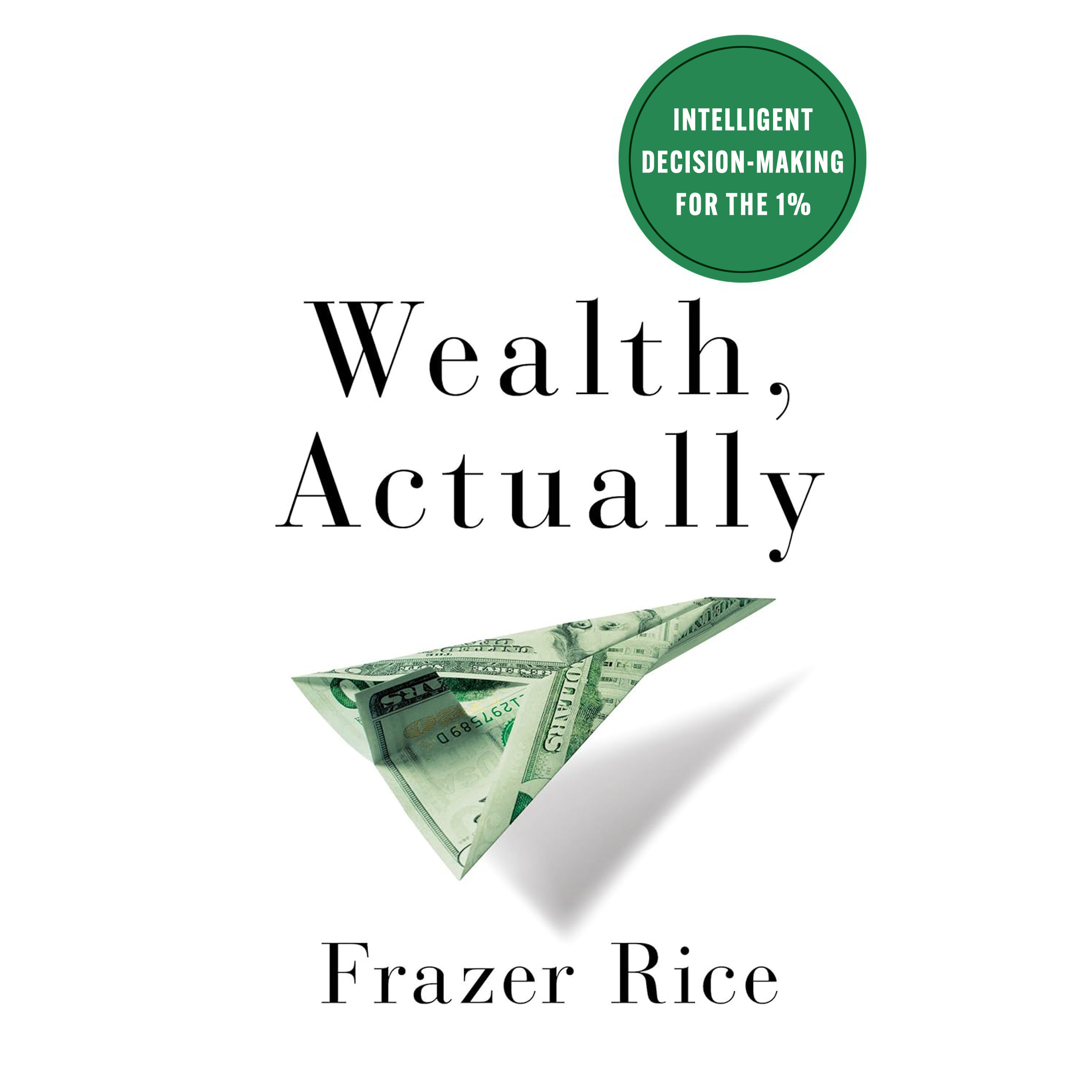
Wealth Actually
Frazer Rice
The Memo by Howard Marks
Oaktree Capital Management